
What a Spec Sheet Actually Is
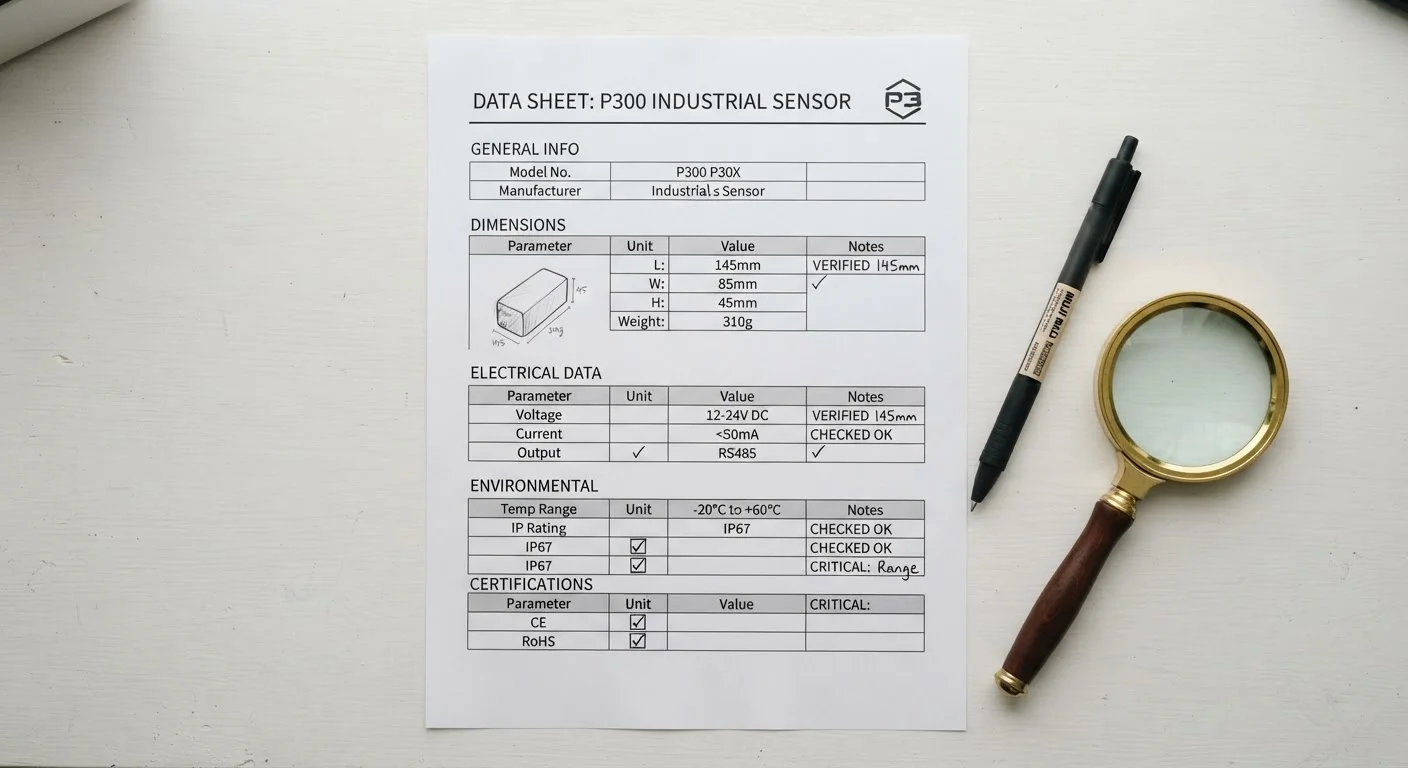
A product specification sheet - sometimes called a spec sheet, data sheet, or technical sheet - is a structured document that summarizes a product's measurable, verifiable characteristics. Unlike marketing copy, which is written to persuade, a spec sheet is meant to inform. It lists dimensions, materials, performance ratings, compatibility requirements, and certifications in a standardized format.
That said, spec sheets are still produced by manufacturers, and how information is presented - or omitted - can still reflect commercial interests. The goal of reading one clearly is to separate what's genuinely documented from what's implied. For a broader look at how product information gets shaped before it reaches you, see what product labels are actually telling you.
Specification Sheet
A structured document listing a product's measurable characteristics, including dimensions, performance ratings, materials, and certifications. It is distinct from marketing copy and is intended to provide verifiable technical information.
Ingress Protection (IP) Rating
A two-digit code (e.g., IP65) indicating a product's resistance to solid particles and liquids, as defined by an international standard. The first digit covers dust/solid protection; the second covers water resistance.
Peak vs. Continuous Rating
Peak rating refers to the maximum output a product can achieve momentarily, while continuous rating reflects what it can sustain over extended operation. These figures can differ significantly and both matter for real-world use.
Manufacturing Tolerance
The allowable range of variation in a listed measurement (e.g., ±0.5 mm). A product within its tolerance range is considered conforming even if its actual measurement differs slightly from the specification.
Third-Party Certification
Verification by an independent testing organization (such as UL, CE, or Energy Star) that a product meets specific standards. This differs from manufacturer self-testing, which carries no independent oversight.
Duty Cycle
The proportion of time a product can operate continuously before requiring a rest or cooldown period. Relevant for power tools, compressors, and similar equipment that can overheat under sustained use.
The Core Sections You'll Find on Most Spec Sheets
Most spec sheets follow a predictable structure, though the terminology varies by industry. Here's what each major section typically covers:
- Physical specifications: Dimensions (height, width, depth), weight, and form factor. Pay attention to whether measurements are listed with or without packaging - this matters for installation, storage, and shipping.
- Performance ratings: Output, capacity, speed, power draw, or efficiency, depending on the product type. These numbers are usually measured under ideal lab conditions, not real-world use.
- Material composition: What the product is made of, sometimes including grades or alloys. Relevant for durability, chemical resistance, or regulatory compliance.
- Electrical or power requirements: Voltage, wattage, amperage, and frequency. Critical for compatibility with your existing infrastructure.
- Environmental ratings: Operating temperature ranges, humidity tolerance, and ingress protection ratings (like IP65 for dust and water resistance).
- Certifications and compliance: Third-party testing marks such as UL, FCC, CE, or Energy Star. These confirm the product has been independently verified against specific standards.
- Compatibility notes: Required accessories, software versions, or system requirements needed for full functionality.
Not every spec sheet will include all of these sections. Missing sections - especially certifications or real-world performance context - are worth noting before you commit to a purchase. Reading between the lines of online product listings covers how omissions can quietly skew your perception of what you're buying.
Numbers That Need Context
The most common mistake consumers make when reading spec sheets is treating every number as a direct, comparable truth. Several categories of figures require additional context:
Peak vs. continuous ratings: A generator rated at 3,500 watts might sustain only 3,000 watts continuously. "Peak" or "max" figures reflect momentary capacity, not sustained operation. Look for both values.
Tested conditions: Efficiency and performance ratings are almost always measured under controlled conditions. Battery life, fuel economy, and audio output figures in particular can differ substantially from everyday use.
Tolerances: Manufacturing tolerances indicate the acceptable range of variation in a measurement (e.g., ±0.5 mm). A product listed at 10 mm could legally be anywhere from 9.5 to 10.5 mm.
Unit consistency: Watch for mixed units within the same sheet - particularly in imported or multi-market documents. Metric and imperial figures sometimes appear together, and conversion errors can create misleading comparisons.
When something on a spec sheet looks unusually impressive, it's worth checking what test standard or methodology was used to arrive at that number. Independent testing organizations and consumer research bodies often publish comparative data that provides helpful real-world context.
What's Often Left Off - and Why It Matters
Omissions on a spec sheet can be just as informative as what's listed. Common items that manufacturers frequently leave out include:
- Longevity or duty cycle: How long the product is rated to perform before degradation - common in batteries, motors, and filters.
- Noise levels: Decibel ratings for appliances, HVAC equipment, or power tools are rarely listed prominently despite being a major quality-of-life factor.
- Tested vs. certified: A product may have been tested by the manufacturer without receiving independent third-party certification. These are not equivalent claims.
- What's excluded from warranty coverage: Spec sheets rarely reference warranty terms. This information lives in a separate document and significantly affects long-term value.
A thorough pre-purchase process means cross-referencing the spec sheet against independent reviews, user manuals, and certification databases. The pre-purchase product research checklist is a useful companion for this step, covering what to verify before you finalize any significant purchase.
If you're evaluating a product through an online listing rather than a manufacturer's official sheet, keep in mind that listings are often simplified summaries - and sometimes inaccurate ones. The marketing language in product descriptions article explains which phrasing patterns to question. For more on the smart buying strategies that help you shop with confidence, that hub is a good starting point.