
Why Product Descriptions Are Written to Sell, Not Inform
Every word in a product description serves a purpose - and that purpose is conversion, not education. Copywriters are trained to frame features as benefits, minimize negatives, and use language that creates desire. That's not deceptive by itself, but it does mean the reader's job is to translate marketing language back into plain facts.
Understanding this dynamic is the foundation of smarter shopping. The goal isn't cynicism - it's calibration. Knowing that a description is a persuasion tool helps you ask better questions and look in the right places for real answers. For a broader look at how product information is presented, see what product labels are actually telling you.
Phrases That Signal Vagueness
Certain words appear constantly in product copy precisely because they sound impressive without committing to anything specific. Recognizing them is a practical skill.
- "Premium" and "high-quality" - No regulatory body defines these terms. Any product can use them.
- "Advanced formula" or "next-generation technology" - These imply improvement over something, but rarely specify what changed or how performance was measured.
- "Professional-grade" - Unless tied to a verifiable certification or industry standard, this is a self-assigned label.
- "Up to" (in performance claims) - "Up to 500 hours of battery life" means that figure represents a ceiling under ideal, often unrealistic, conditions.
- "Inspired by" or "comparable to" - This phrasing signals similarity, not equivalence. The comparison is usually unverified.
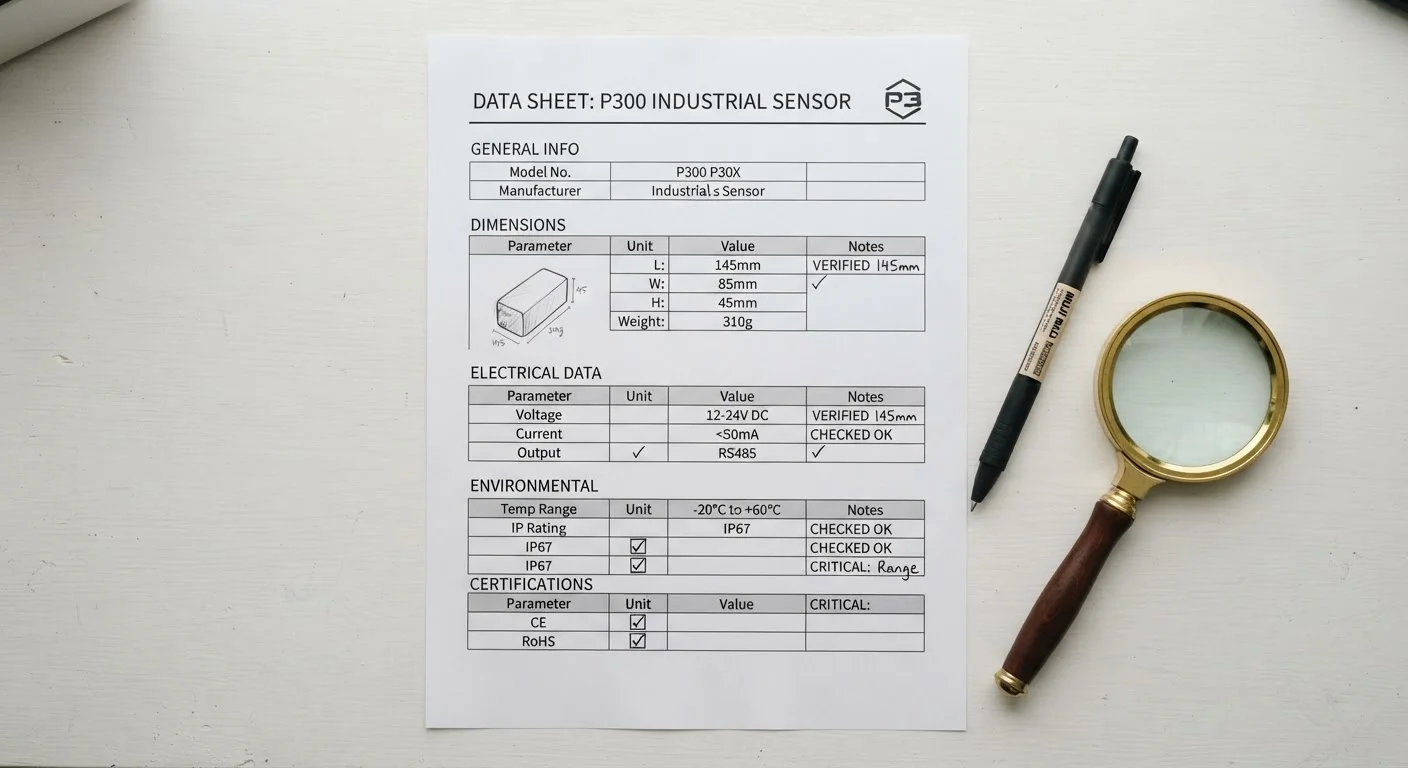
These phrases aren't automatically dishonest, but they shift the burden of proof to the shopper. When you spot them, look for a specification sheet or independent testing data instead. Our guide on reading a product specification sheet explains what those numbers actually mean.
The "Up To" Qualifier Deserves Special Attention
Performance claims using "up to" - whether for battery life, coverage area, range, or speed - reflect best-case scenarios that may require specific conditions to achieve. Real-world performance is typically lower. When this phrasing appears, look for independent lab tests or verified user data to get a more realistic baseline.
What's Missing Matters as Much as What's There
Omission is one of the most common tactics in product copy. Descriptions tend to lead with strengths and quietly skip over limitations. A few questions to ask when something seems absent:
- Is the material composition listed? Generic terms like "premium materials" without specifying what those materials are often signal lower-cost components.
- Are compatibility requirements disclosed? Technology products especially may require specific operating systems, hardware, or subscriptions that aren't front-and-center.
- What does the warranty actually cover? A prominently advertised warranty may exclude the most common failure modes.
- Are return conditions clear? "Satisfaction guaranteed" doesn't always mean hassle-free returns.
Once you've identified gaps in a description, cross-reference with reading between the lines of online product listings, which covers how listing structure itself can obscure key facts.
Certifications vs. Self-Declared Claims
Not all claims carry the same weight. There's a meaningful difference between a manufacturer saying a product is "eco-friendly" and a product carrying a recognized third-party certification. Self-declared claims require no external verification. Certified claims do.
When evaluating a claim, ask: who verified it? Independent bodies - whether government agencies, recognized standards organizations, or accredited testing labs - hold manufacturers to documented criteria. A logo from a credible certifier carries more evidentiary weight than any adjective in the description.
This distinction matters especially for environmental and safety claims. For a detailed breakdown of terms like "natural" and "non-toxic," see separating fact from marketing fiction in eco-friendly claims.
Treat vague superlatives as prompts to seek third-party evidence.
Words like 'best,' 'superior,' and 'unmatched' are unverifiable as written. Acting on them without supporting data means making a decision based on the seller's self-assessment alone.
Read the fine print of warranties and guarantees before purchase, not after.
Warranties are frequently marketed as selling points but contain exclusions that limit real-world usefulness. Reading them upfront prevents post-purchase disappointment.
Cross-check marketing claims against user reviews that include verified purchase labels.
Verified purchasers have direct experience with the product. Their observations about durability, ease of use, or performance gaps often reveal what descriptions gloss over.
Note what a description doesn't say and ask why.
Silence about key specs - material composition, compatibility, included accessories - is usually intentional. Identifying what's missing helps you ask targeted questions before committing.
Look for the standard or benchmark behind any performance figure.
Numbers in isolation mean little without knowing how they were measured. A figure tested under controlled lab conditions may not translate to everyday use.
Quick Habits That Make You a Sharper Reader
Decoding product descriptions doesn't require hours of research. A few consistent habits dramatically reduce the chance of a disappointing purchase.
Shopping private-label or store-brand alternatives? Apply the same scrutiny regardless of price point - quality and value aren't determined by the label alone. Our overview of private label vs. name brand products helps clarify what you're actually paying for when brand name enters the equation.