Why Merging and Lane Changes Go Wrong
Improper merging is a significant contributor to highway crashes in the United States. The Federal Highway Administration has identified lane-change and merge maneuvers as factors in a substantial share of freeway collisions each year. Despite this, merging is rarely taught with enough depth in standard driver education - most new drivers learn only the basics before getting a license.
The two most common errors are merging too slowly and failing to check blind spots adequately. Drivers who slow down on an on-ramp force highway traffic to brake unexpectedly, creating a chain reaction that can cause rear-end collisions. Drivers who rely entirely on mirrors miss the critical areas that no mirror fully covers. See our guide to blind spots and mirrors for a thorough breakdown of where those gaps exist and how to account for them.
Understanding the mechanics of a correct merge - and practicing each element deliberately - can substantially lower your collision risk on any road.
What you will need
Step-by-Step: How to Merge and Change Lanes Safely
The steps below apply to both highway on-ramp merges and routine lane changes on surface streets or freeways. Each element builds on the last, so work through them in order until the sequence becomes automatic.
Assess the gap and target traffic speed early
As soon as you enter the on-ramp or prepare to change lanes, begin scanning for an adequate gap in the target lane. You need a space that is at least three to four seconds of following distance - check this by picking a fixed point and counting after the car ahead of you passes it. Simultaneously, note the speed of traffic in that lane so you can begin accelerating to match it.
Signal your intention clearly
Activate your turn signal before you begin moving toward the lane - not during or after. Signaling early communicates your intent to surrounding drivers and gives them time to adjust. Three to five seconds of signal before the actual move is a reasonable minimum on a highway.
Match your speed to traffic in the target lane
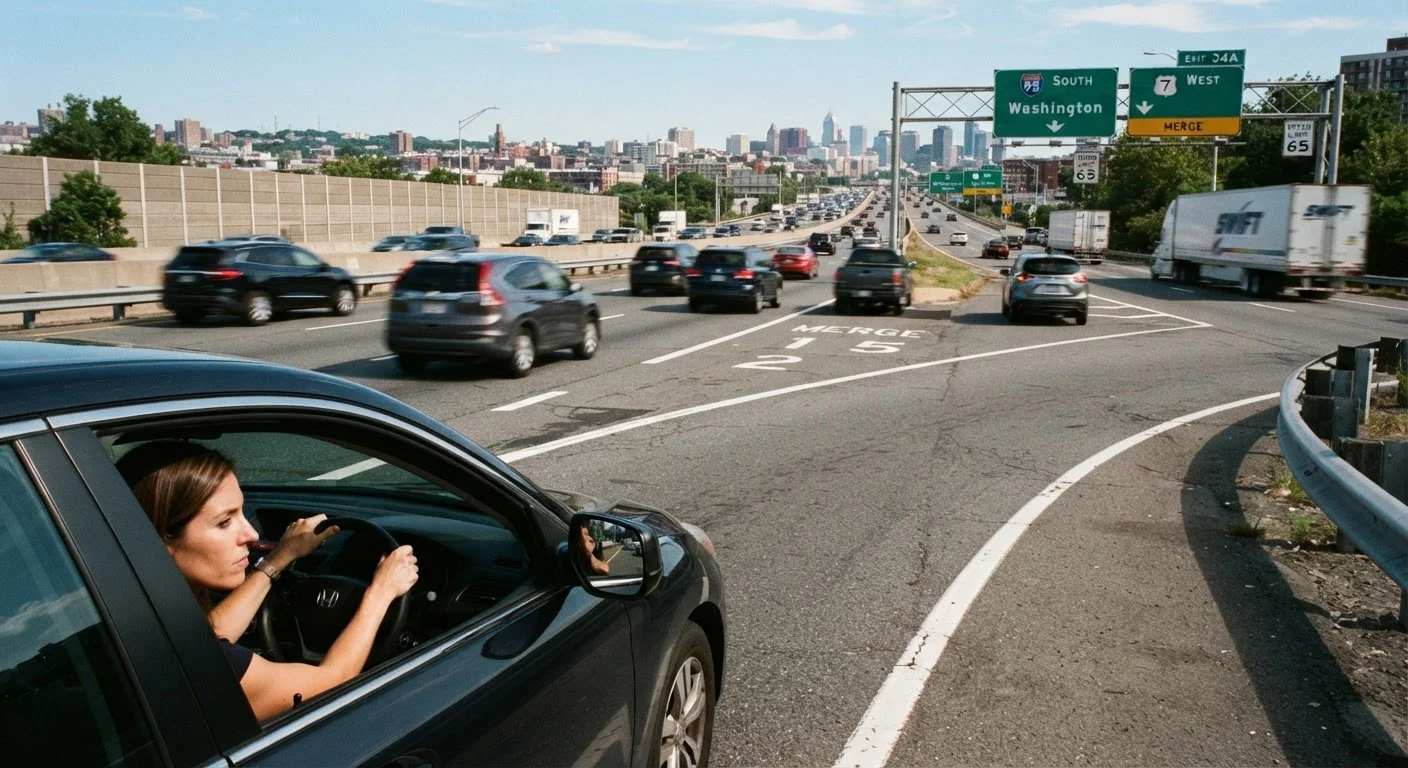
Accelerate or decelerate so that your speed matches the flow in the lane you're entering. On a highway on-ramp, this means reaching near-highway speed before the merge point - not at it. Arriving too slowly forces other drivers to brake suddenly, which is a leading cause of rear-end collisions in merge zones.
Check mirrors, then physically check your blind spot
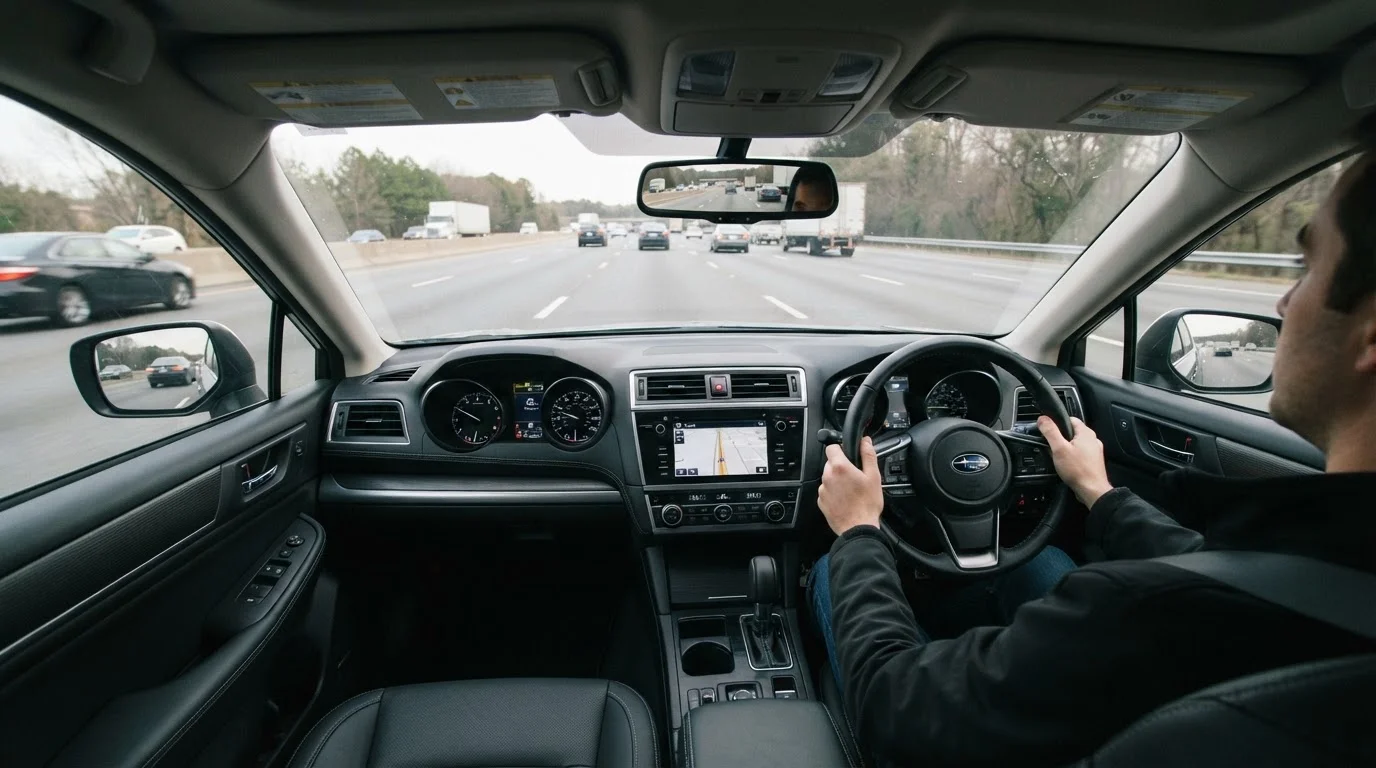
Do a full mirror check - rearview, then side mirror on the target side - followed immediately by a quick over-the-shoulder glance into your blind spot. Mirrors cover most of the surrounding area but leave a zone roughly beside and slightly behind your vehicle that only a head-turn will reveal. This physical check takes less than a second and is non-negotiable before any lane change.
Move smoothly and decisively into the gap
Once you've confirmed the gap is clear and your speed is matched, steer into the lane with a smooth, steady movement. Avoid jerky or overly gradual drifting - both confuse nearby drivers. Once in the lane, center yourself within it promptly and cancel your signal.
Re-establish a safe following distance
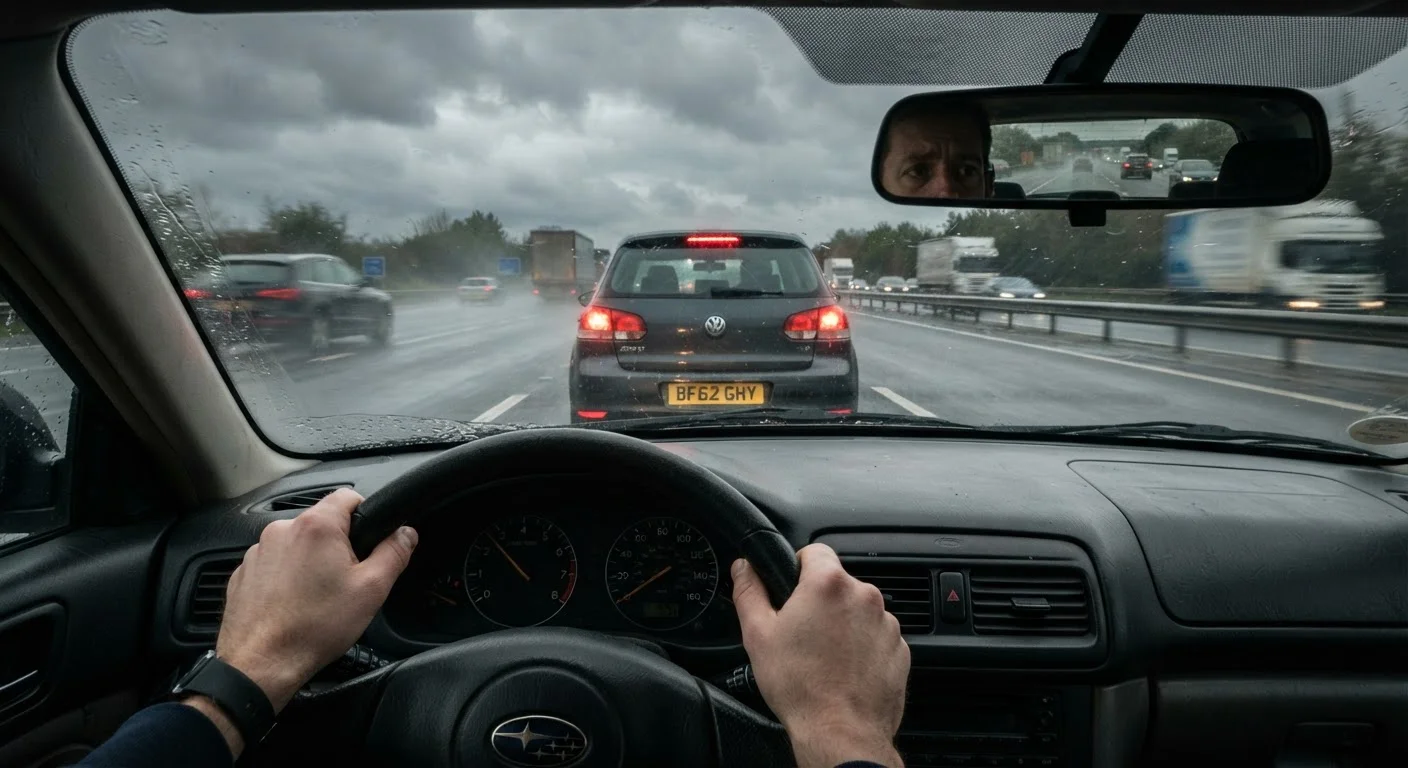
After completing the merge or lane change, immediately re-check your following distance from the vehicle now ahead of you. Aim for at least three seconds under normal conditions - more in rain, fog, or heavy traffic. Settling into the new lane without establishing proper spacing negates much of the safety work you just did.
Communicate, Don't Compete
Safe merging is cooperative by nature. If a driver signals to merge into your lane and there's adequate space, easing off slightly to create a gap costs you almost no time and significantly reduces crash risk for everyone. Predictable, courteous driving produces smoother traffic flow than aggressive positioning.
The Zipper Merge: What It Is and When to Use It
The zipper merge - also called a late merge - is a technique endorsed by transportation agencies in many U.S. states for use in heavy or stop-and-go traffic. Rather than moving into the open lane as early as possible, drivers use both lanes fully until the merge point, then alternate one-for-one like the teeth of a zipper.
Research from the Minnesota Department of Transportation found that the zipper merge reduces the overall length of traffic backups and distributes wait time more equitably. It can feel counterintuitive, because many drivers view staying in the closing lane as cutting in line. In reality, using available road space until the designated merge point is both legal and efficient in most jurisdictions - though you should always yield appropriately and merge cooperatively.
The zipper merge is not appropriate at freeway speeds with light traffic. In those conditions, merging earlier and matching speed remains the correct approach. Tailgating in the merge zone is particularly dangerous - our article on stopping distances and safe following gaps explains exactly why crowding the car ahead is so risky at any speed.
For a broader foundation in road safety - especially if you're a newer driver - the complete road safety introduction covers the full range of skills needed before driving solo.