The Core Difference: One Season vs. Many
Think of annuals as a single-season performance and perennials as a standing repertoire. An annual like a marigold or zinnia sprouts, blooms intensely, produces seed, and dies - all within one growing season. A perennial like a coneflower or daylily may look spent after frost, but its root system overwinters and pushes new shoots up the following spring.
This fundamental difference drives nearly every practical decision you'll face: how much you spend at the nursery each spring, how much digging and replanting you do year to year, and how predictable your garden looks from season to season.
Understanding this distinction also shapes which plants suit your goals. If you want a burst of nonstop color this summer, annuals deliver. If you want a border that fills in more reliably each year with less replanting, perennials are the foundation.
What Perennials Bring to a Garden Plan
Perennials provide the structural backbone of most well-designed home landscapes. Once established - which can take one to three growing seasons - they spread gradually, fill in bare soil, and bloom dependably without requiring you to replant from scratch each year.
2-3 years
Typical establishment period for perennials
Most horticultural extension programs note that perennials reach full size and bloom potential within two to three growing seasons after planting.
~12 weeks
Average bloom duration for common annuals
Many warm-season annuals bloom continuously from late spring through the first fall frost, roughly 10-14 weeks depending on climate and care.
3-5x
Cost advantage of perennials over time
Garden educators commonly estimate that perennials pay back their higher purchase price within three to five seasons compared to replanting annuals annually.
The tradeoff is patience. Many perennials spend their first year focused on root development, producing modest flowers or none at all. Experienced gardeners sometimes say: "Sleep, creep, leap" - the plant sleeps in year one, creeps in year two, and leaps into full performance by year three.
Perennials also tend to self-propagate, either by spreading underground rhizomes or by self-seeding, which means a single plant can eventually fill a space without any investment from you. This is particularly helpful when planning a low-maintenance yard alongside a year-round maintenance routine.
What Annuals Do Differently
Annuals are the garden's quick-change artists. Because they must complete their entire life cycle in one season, they pour most of their energy into producing flowers - which is why they tend to bloom more continuously and more profusely than perennials. This makes them invaluable for filling gaps in a perennial border, adding dense color to containers, or brightening an area while slower-growing perennials establish themselves.
Annuals also give you flexibility. Tired of red? Plant yellow next spring. Want to try a new layout? You're starting with a blank slate anyway. For gardeners who enjoy the process of planning and planting each season, annuals provide that hands-on engagement. If you're also considering where annuals fit in a food garden, our guide to starting a vegetable garden from zero covers how many vegetables - which are technically annuals - fit into a first-time planting plan.
Combining Both for the Strongest Results
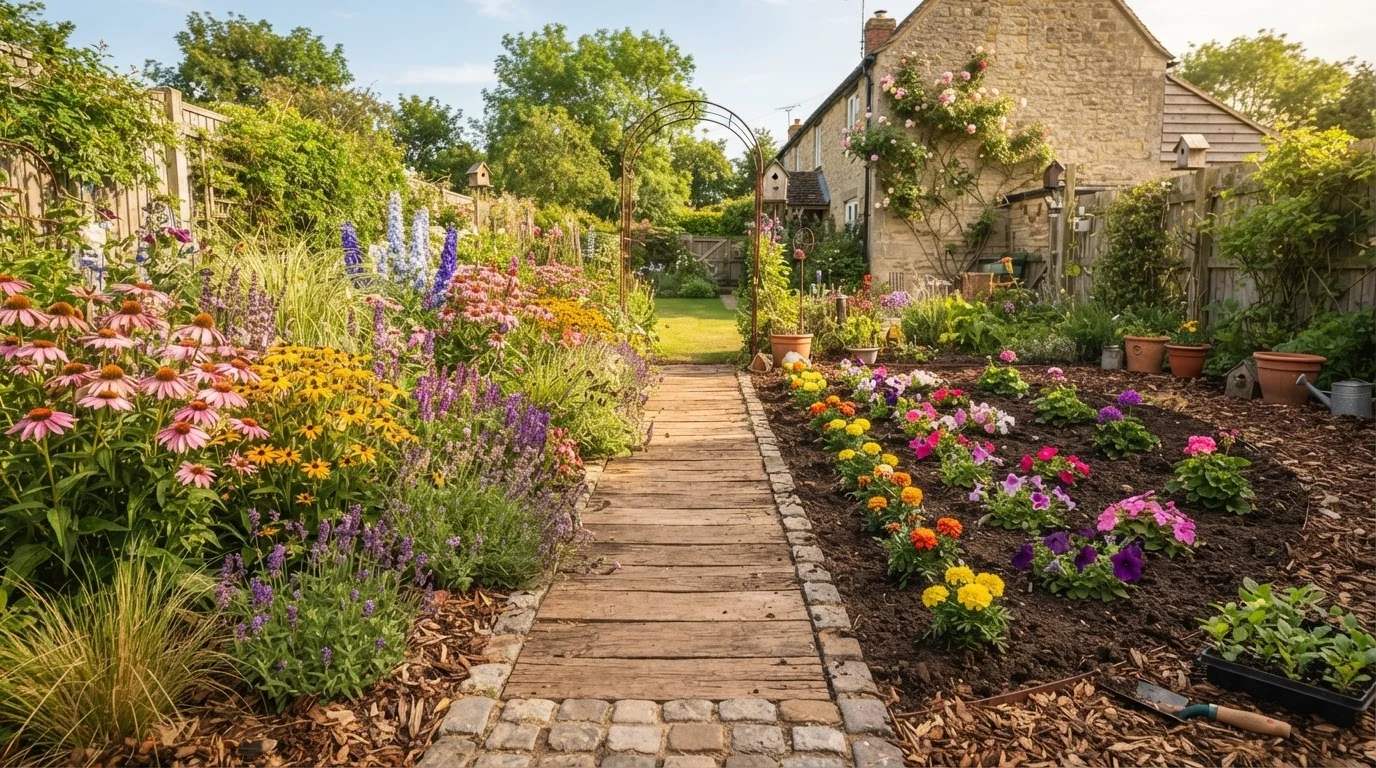
Most successful home gardens use both plant types intentionally. A common approach: plant perennials to anchor key areas of the bed - providing consistent foliage, reliable bloom windows, and multi-season interest - then scatter annuals in the spaces between to keep color saturated throughout the growing season.
This strategy also softens the cost curve. You invest more upfront in perennials that will return and multiply, while spending modestly each spring on annuals to keep things lively. Over a few years, your perennials may spread enough that you need fewer annuals to fill the same visual role.
Your choice of bed type can reinforce this approach. For a deeper look at the structural side of garden planning, see our comparison of raised beds vs. in-ground planting to understand which setup supports each plant type best. If you're also weighing ecological considerations, native plants vs. ornamental exotics explores how species origin affects your yard's broader environment - a useful lens when selecting both perennials and annuals.
Plan Your Bloom Sequence Before You Plant
Map out which perennials bloom in early, mid, and late season, then identify the gaps where annuals can carry color. A simple sketch on paper showing bloom timing by plant prevents a common mistake: a garden that peaks spectacularly in June and looks bare by August. Pairing this bloom calendar with a reliable irrigation plan ensures both plant types get the water they need throughout the season.