What You're Actually Deciding Between
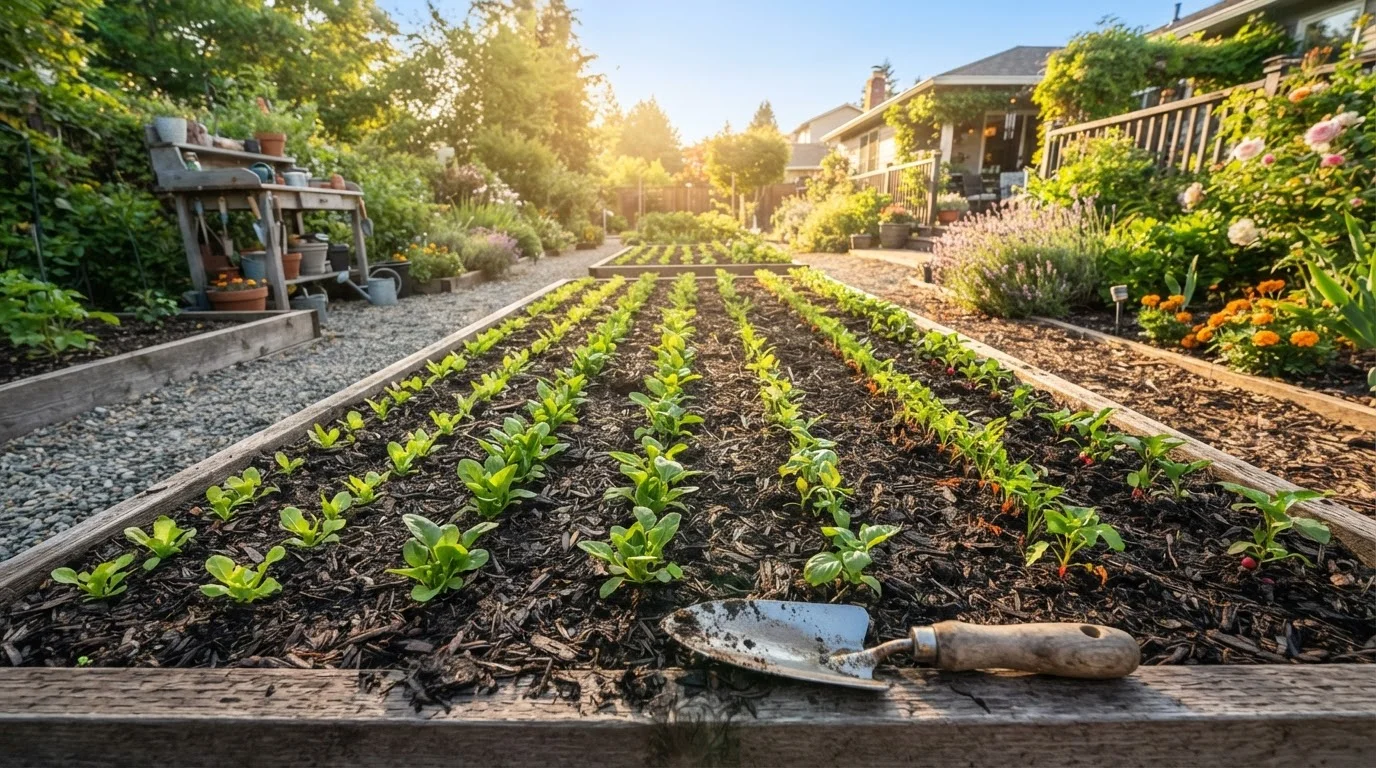
A raised bed is a contained growing structure - typically a wooden, metal, or composite frame - filled with a custom soil mix and positioned above ground level. You control everything inside it: the soil composition, drainage, and depth. An in-ground garden works with whatever soil exists in your yard, amended as needed, with plants growing directly in the earth at grade level.
Neither method is universally superior. Both can produce healthy, high-yielding gardens. The difference lies in which suits your specific conditions better. If you're just getting started, our beginner's guide to starting a vegetable garden covers how to evaluate your site before committing to either approach.
| Criterion | Raised Beds | In-Ground Planting |
|---|---|---|
| Startup Cost | Higher (frame + bulk soil) | Lower (tools + amendments) |
| Soil Control | Complete - custom mix | Limited by native soil |
| Drainage | Excellent by design | Varies by native soil |
| Season Length | Longer (soil warms faster) | Standard for your zone |
| Weed Pressure | Lower | Higher without mulching |
| Watering Needs | More frequent | Less frequent |
| Space Scalability | Limited by frame size | Easily expanded |
| Physical Accessibility | High (adjustable height) | Requires bending/kneeling |
| Deep-Rooted Crops | Possible with tall frames | Naturally accommodated |
| Aesthetic Tidiness | Very tidy and defined | Varies with maintenance |
The Case for Raised Beds
Raised beds shine in situations where native soil is the problem. Clay soil that drains poorly, rocky ground, or soil that may have absorbed contaminants from old paint, treated wood, or industrial activity are all scenarios where building above ground makes practical sense. You simply fill the frame with a quality mix - typically a blend of topsoil, compost, and an aerating material like perlite - and skip the native soil entirely.
Soil in raised beds also warms faster in spring because it's elevated and exposed on multiple sides. For cool-climate gardeners, this can translate to starting seeds two to four weeks earlier than in-ground neighbors. Weed pressure is lower too, especially if you line the bed floor with cardboard or landscape fabric before filling.
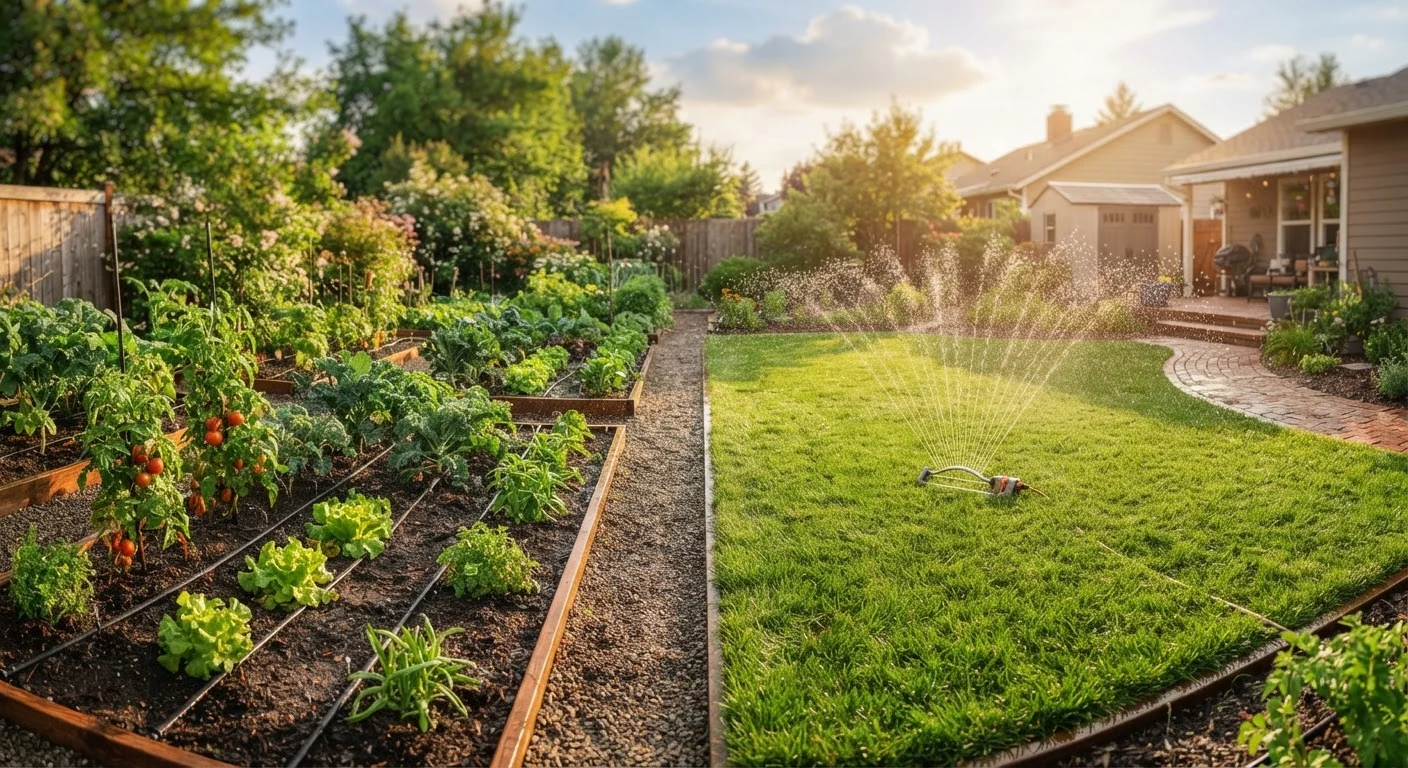
The main trade-offs are upfront cost and ongoing watering. Materials for a standard 4×8-foot bed - frame, hardware, and enough soil to fill it - represent a meaningful investment. Raised beds also dry out faster than in-ground plots, which means more frequent watering during hot stretches unless you set up drip irrigation. Our comparison of drip irrigation vs. sprinkler systems can help you decide how to keep beds consistently moist without overwatering.
The Case for In-Ground Planting
When native soil is already decent - loamy, well-draining, and reasonably fertile - in-ground planting is the straightforward, cost-effective path. You dig, amend with compost, and plant. There's no frame to build, no bulk soil to haul in, and no structural maintenance to manage over time.
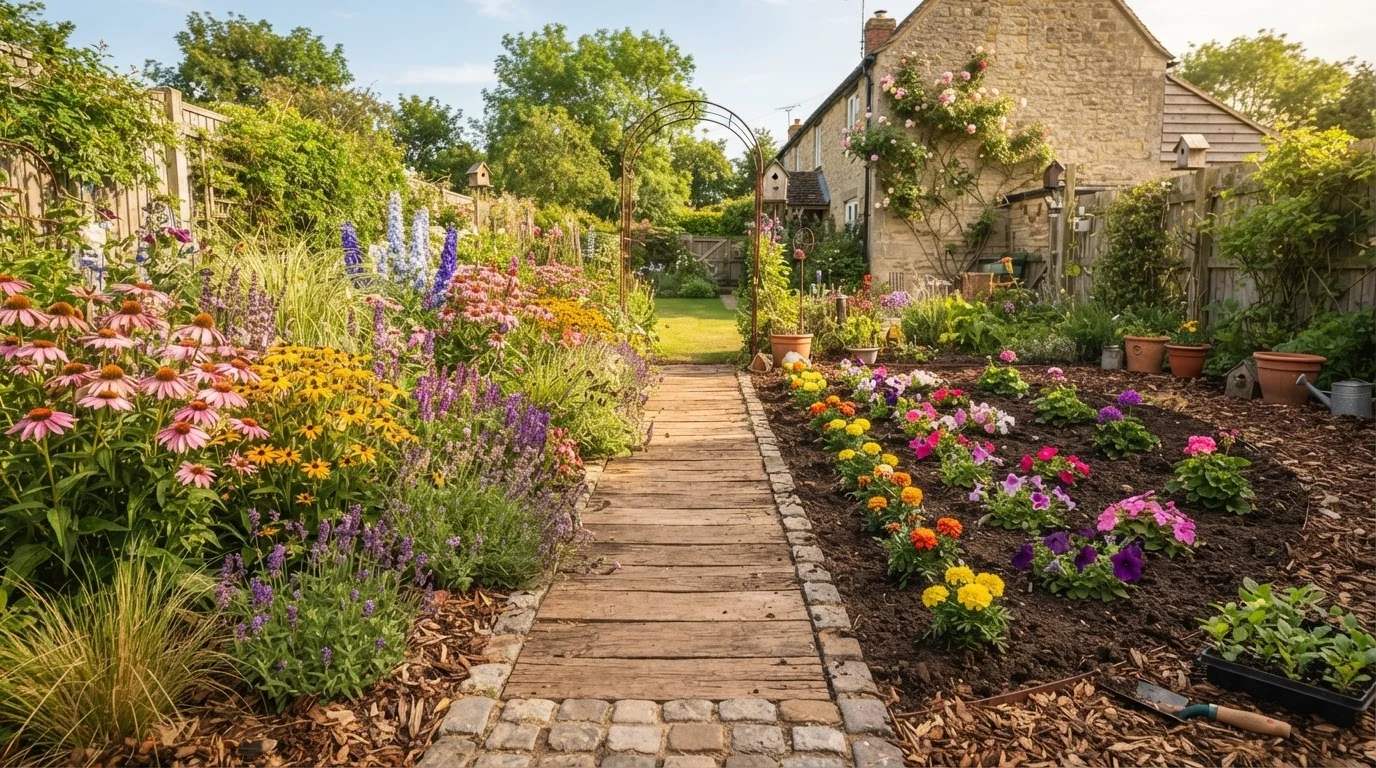
In-ground plots also suit larger-scale growing more naturally. Deep-rooted crops like carrots, parsnips, and asparagus need substantial soil depth. Sprawling plants - squash, melons, indeterminate tomatoes - benefit from room to spread that a raised bed's fixed footprint can limit. Perennial edibles and flowering plants that return each season, like established asparagus crowns or berry canes, are especially well suited to in-ground situations where they won't need to be replanted around a contained frame. For more on planning around plant life cycles, see our piece on perennials vs. annuals.
The main challenges are soil quality and weed management. In-ground beds can develop compaction over time if walked on, and weeds spread freely from surrounding lawn or beds. Consistent mulching and defined pathways address both issues effectively.
Making the Decision for Your Yard
Start by evaluating your native soil. A simple home soil test - available through most cooperative extension offices - will tell you your soil's texture, pH, and basic nutrient levels. If results show heavy clay or sandy, fast-draining conditions, raised beds let you sidestep the long process of amending native soil into something workable.
Next, consider physical accessibility. If kneeling or bending is painful, a raised bed at counter height can make gardening sustainable long-term. Budget matters too: in-ground plots require little more than a shovel and some compost to get started, while raised beds involve more upfront cost.
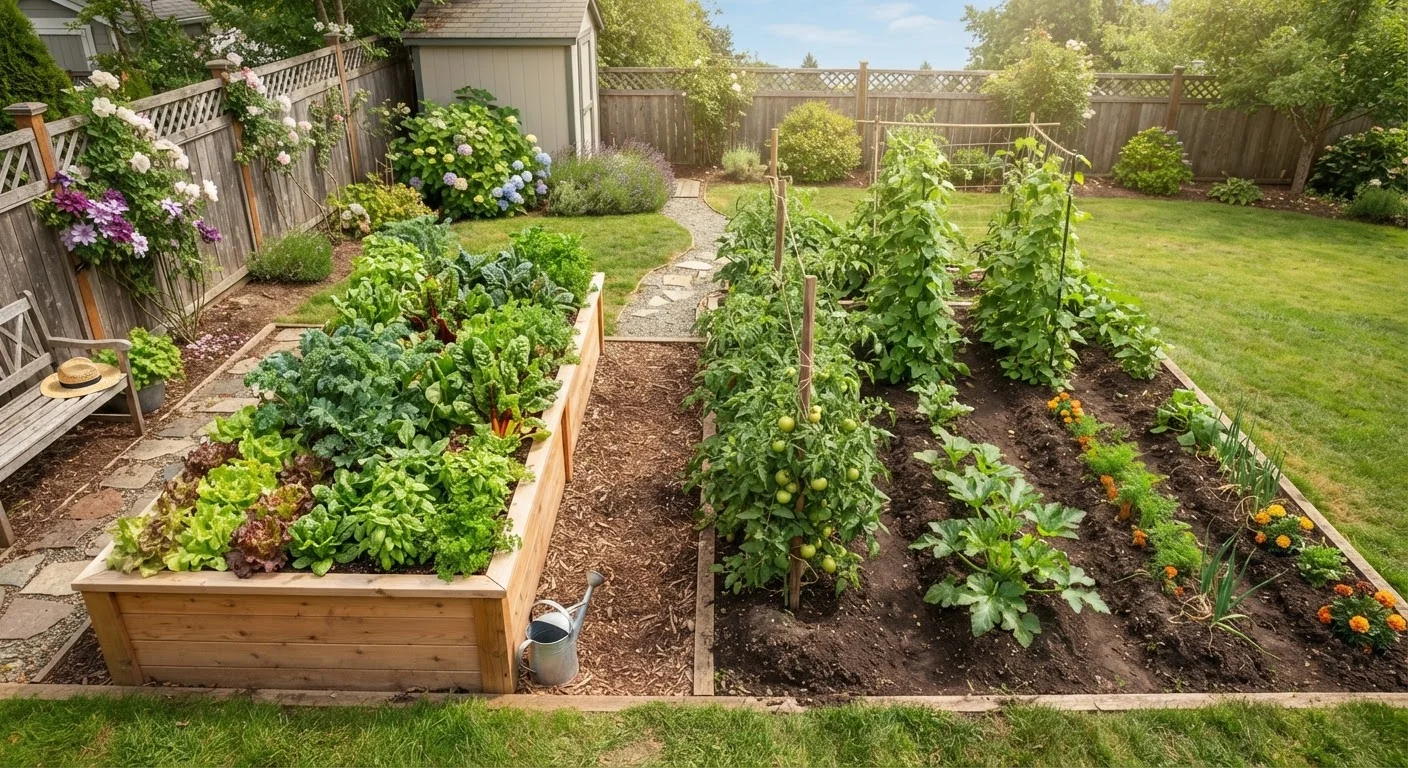
Many gardeners ultimately use both. Raised beds work well for high-value vegetables - salad greens, herbs, peppers - while in-ground rows handle larger crops. Whatever combination you choose, thoughtful plant placement pays dividends. Our guide to companion planting combinations that work can help you arrange plants in either system to improve yields and reduce pest pressure naturally.
6-8 inches
Minimum raised bed depth for most vegetables
Most cooperative extension programs recommend at least 6 inches of quality growing medium for shallow-rooted crops, and 12+ inches for root vegetables.
2-4 weeks
Earlier planting possible with raised beds
Because raised bed soil is elevated and exposed, it typically warms faster in spring, allowing earlier seed starting in cooler climates.
4×8 ft
Most common raised bed footprint
A 4-foot width allows a gardener to reach the center from either side without stepping into the bed, preserving soil structure.