Why Plant Relationships Matter
Companion planting is the practice of growing different plants near each other to create mutually beneficial conditions. When it works, it can reduce pest pressure, improve pollination, fix nitrogen in the soil, and even enhance flavor. When it doesn't work - or when expectations are inflated - gardeners end up frustrated by overpromised results.
The honest picture is this: some combinations have solid horticultural science behind them, while others are rooted in folk tradition and anecdotal observation. That doesn't make the latter worthless - experienced gardeners have refined these practices over generations - but it does mean approaching companion planting with realistic expectations matters. Think of it as a strategy that supports your garden ecosystem, not a silver bullet.
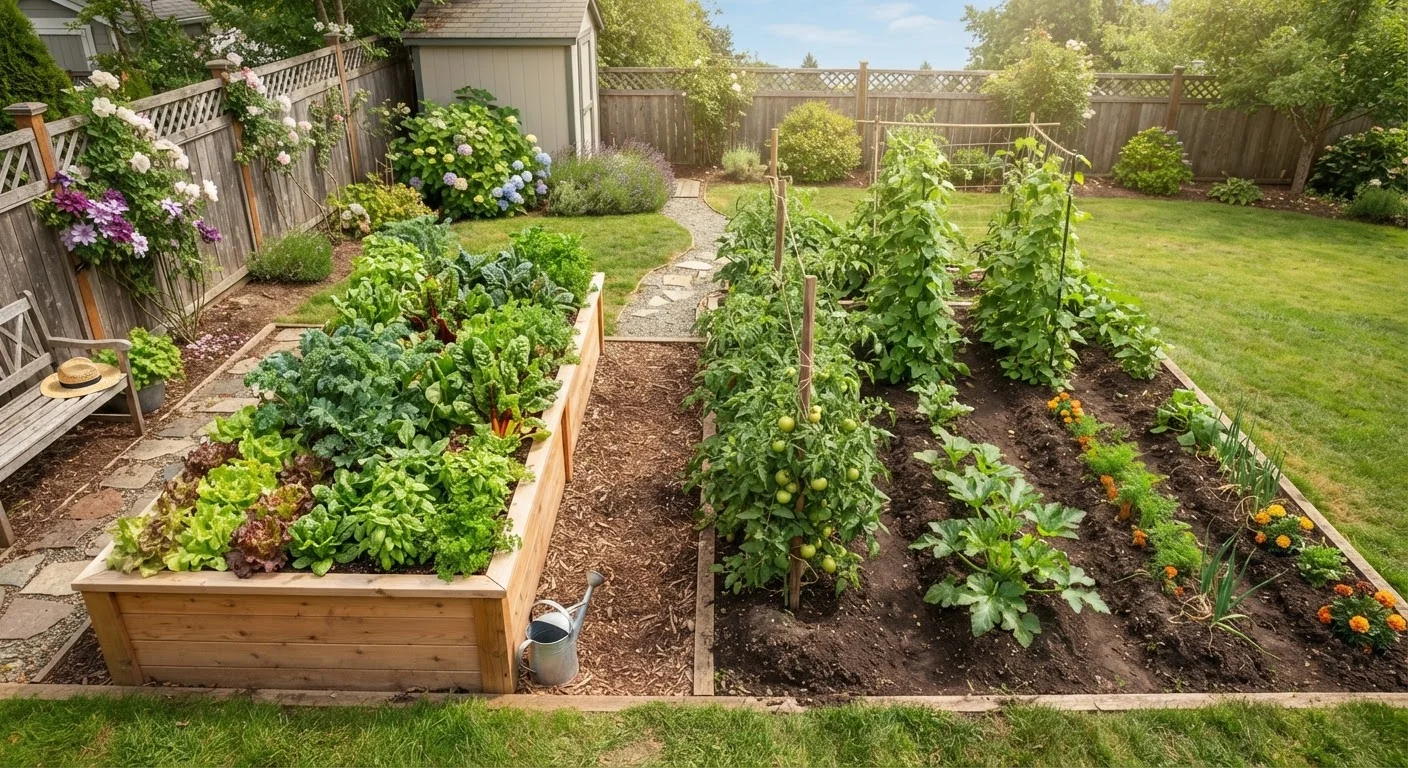
If you're just getting started growing food, our beginner's guide to vegetable gardening covers the foundational steps before you dive into plant pairings. And when you're ready to think about garden layout, consider how raised beds versus in-ground planting affects spacing and companion planting possibilities.
The Three Sisters: Corn, Beans, and Squash
This trio originates with Indigenous agricultural traditions of North America and remains one of the most ecologically complete plant combinations a home gardener can use. Corn provides a vertical trellis for pole beans to climb. Beans fix atmospheric nitrogen into the soil through a symbiotic relationship with root bacteria, feeding the corn and squash. Squash spreads its large leaves along the ground, shading out weeds and retaining soil moisture.
Plant corn first and allow it to reach about six inches before adding beans at its base. Squash goes in at the same time as beans, a foot or so out from the corn hill. This sequencing matters - squash planted too early can compete before the corn establishes.
Each of the Three Sisters contributes something the others need - structure, nitrogen, and ground cover.
Tomatoes and Basil
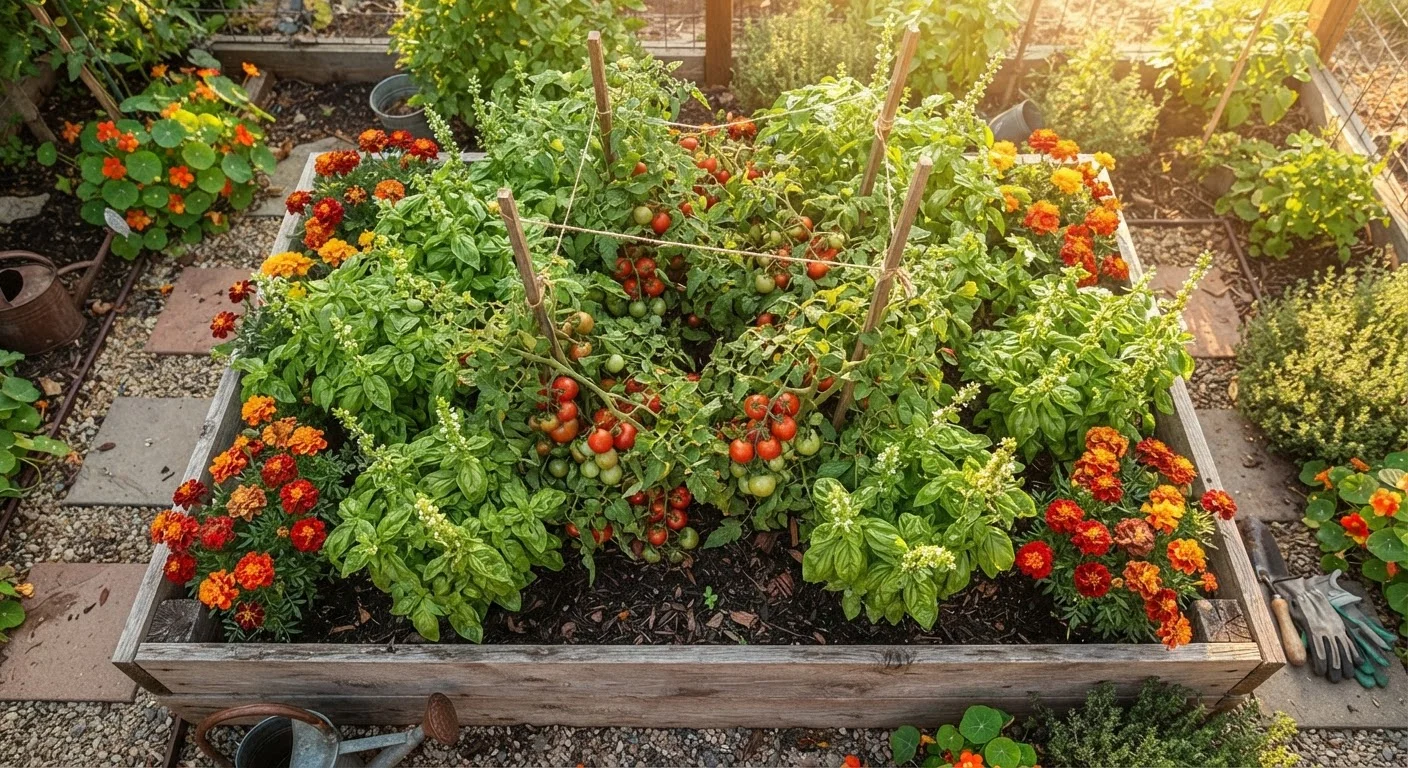
This is one of the most cited companion pairs in vegetable gardening, though the evidence is mostly observational. Gardeners commonly report that basil planted near tomatoes seems to deter aphids and hornworm moths, possibly through the aromatic volatile compounds basil releases. Some small-scale research has explored this, but the findings aren't definitive enough to count as established science.
What is clear: basil and tomatoes share nearly identical growing needs - full sun, consistent moisture, warm temperatures - making them genuinely compatible neighbors even if the pest-deterrence claims remain uncertain. Plant basil six to twelve inches from tomato stems so both get adequate airflow.
Basil and tomatoes thrive under the same conditions, making them naturally compatible regardless of pest claims.
Marigolds Throughout the Vegetable Garden
Marigolds - particularly the French variety (Tagetes patula) - have some of the strongest research backing in companion planting. Their roots release a compound called alpha-terthienyl, which has been shown to suppress root-knot nematodes (microscopic soil-dwelling organisms that damage vegetable roots). For this effect to work, marigolds need to be planted densely and allowed to grow for a full season before the area is used for susceptible crops.
Above ground, marigolds attract pollinators and predatory insects such as hoverflies, which prey on aphids. They're also visually striking. Plant them along borders, in rows between vegetables, or in scattered clusters throughout the bed.
French marigold roots release compounds that suppress soil nematodes - one of companion planting's best-researched benefits.
Carrots and Onions
The pairing of carrots and onions is based on the idea that each repels the other's primary pest. Onion flies are said to be deterred by carrot scent; carrot flies by onion scent. This concept has a long history in European kitchen garden tradition. The evidence is anecdotal, but the plants themselves are genuinely compatible - they have different root depths (carrots go deep, onion bulbs are shallow) so they don't compete for the same soil resources.
Interplant them in alternating rows or groups. Both prefer well-drained, loose soil and full sun. Avoid planting either near beans, as onions in particular can inhibit legume growth.
Carrots and onions occupy different root zones, so they grow side by side without competing for nutrients.
Nasturtiums as Trap Crops
A trap crop is a plant grown specifically to attract pests away from more valuable crops. Nasturtiums are highly attractive to aphids - particularly the black bean aphid - drawing them away from nearby vegetables. The strategy works best when you monitor the nasturtiums regularly. Once they're heavily colonized, remove and dispose of the infested plants before populations migrate.
Nasturtiums also attract beneficial insects like predatory wasps and hoverflies when in bloom. They're edible, easy to grow from seed, and thrive in poor soil - often performing better without fertilizer, which can produce excessive foliage at the expense of flowers.
Nasturtiums lure aphids away from vegetables - but monitor them closely and remove infested plants promptly.
Dill and Brassicas (With a Caveat)
Dill in its young, feathery stage is a good companion for brassicas - the cabbage family, including broccoli, kale, and Brussels sprouts. Young dill attracts beneficial wasps that parasitize cabbage worms and other caterpillars that commonly damage brassica leaves. It also draws in predatory insects generally.
The important caveat: once dill matures and goes to flower, it can cross-pollinate with carrots and negatively affect nearby fennel. More critically, mature dill near tomatoes may inhibit their growth - keep them separated once dill bolts. Plan your garden so dill is harvested young, or position it away from sensitive neighbors before it sets seed.
Young dill attracts pest-parasitizing wasps, but mature dill can interfere with tomatoes - timing is everything.
Making the Most of These Pairings
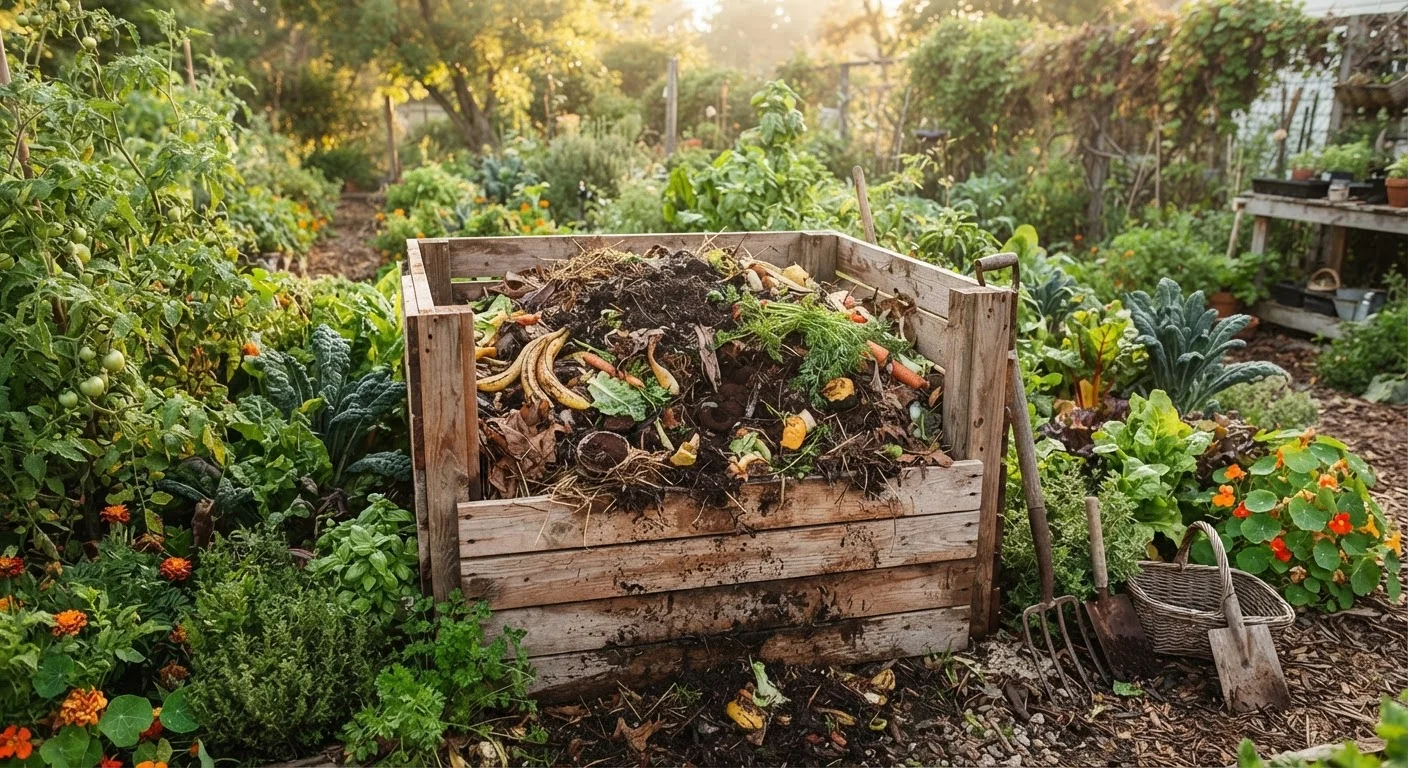
Companion planting works best as one layer of a broader garden strategy. Healthy soil is the foundation - composting kitchen and yard scraps is one of the most effective ways to feed your garden without synthetic inputs. Pair that with proper mulching to retain moisture and suppress weeds between your companion groupings.
For pest control beyond what companion planting alone can achieve, working with beneficial insects and physical barriers fills in the gaps without reaching for chemical sprays. Companion planting slots naturally into that ecological approach - plants providing habitat and chemical signals that support a balanced garden environment.
Start with one or two pairings this season. Observe what changes - pest levels, plant vigor, pollinator visits - and adjust. Gardening is a long experiment, and the combinations that work best are often the ones you refine over several growing seasons in your own specific conditions.
Test One New Pairing Each Season
Rather than overhauling your entire garden layout, introduce one new companion combination each growing season. Keep simple notes on what you observe - pest levels, plant size, overall yield - so you build a record of what actually works in your specific soil, climate, and conditions. Over a few seasons, you'll develop reliable pairings tailored to your yard rather than generic advice.