How Each System Delivers Water
The core difference between drip irrigation and sprinkler systems comes down to where water lands and how fast it gets there.
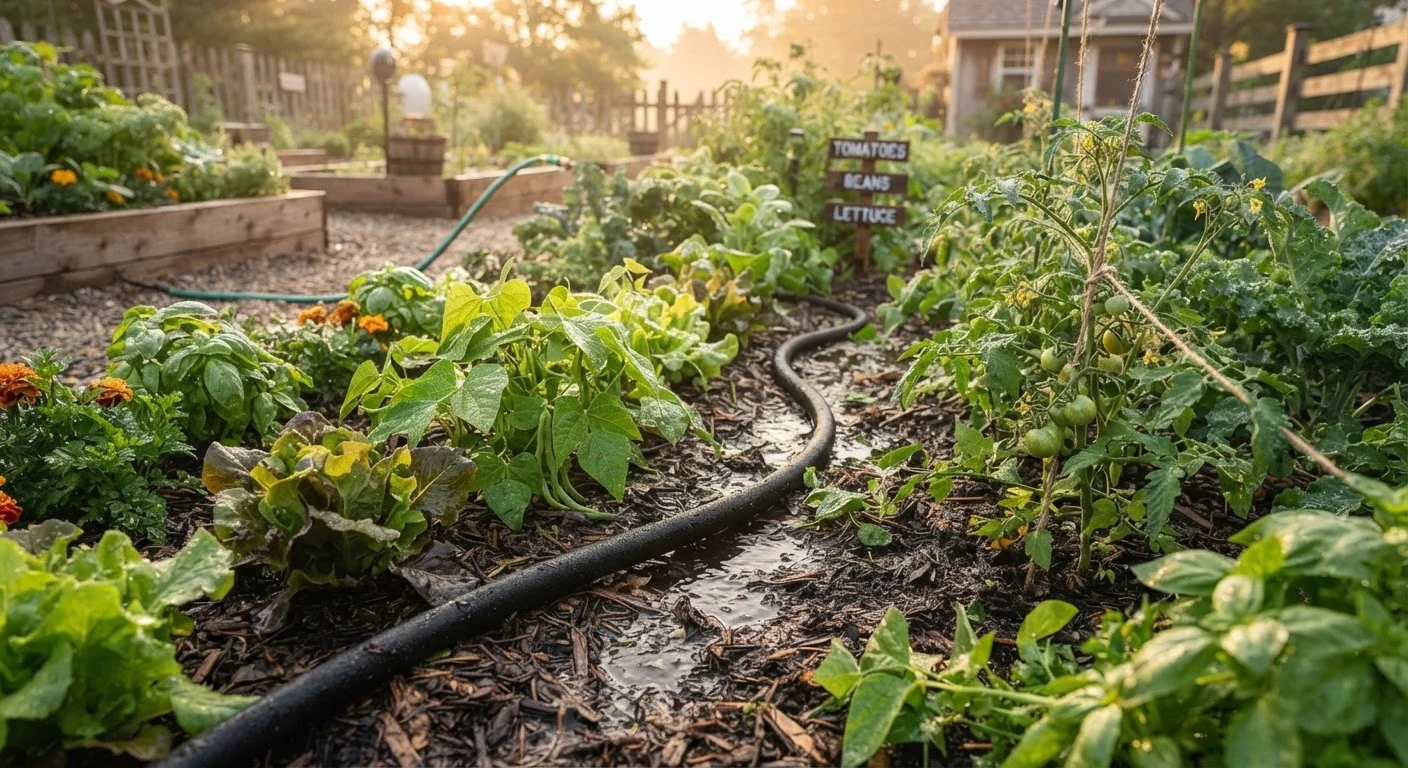
Drip irrigation runs water through a network of flexible tubing fitted with small emitters - devices that release water slowly, drop by drop, right at or just below soil level. Because water goes directly to the root zone, very little is lost to evaporation or runoff. Drip setups can be laid on the surface or buried a few inches down and are commonly used in vegetable rows, flower beds, and container gardens. If you're starting a vegetable garden from scratch, a basic drip kit is one of the most beginner-friendly investments you can make.
Sprinkler systems distribute water through rotating or fixed heads that spray a wide arc above ground, mimicking rainfall. Pop-up in-ground heads are the familiar lawn staple; above-ground oscillating sprinklers work similarly on a smaller scale. The overhead spray pattern excels at uniform coverage across turf and other dense, low plantings, but a meaningful portion of water evaporates before reaching roots - especially during midday heat.
Efficiency, Water Use, and Plant Health
Water efficiency is where drip systems hold a clear advantage. By bypassing the air entirely, drip emitters lose far less moisture to evaporation. Research from cooperative extension programs consistently shows drip systems can use roughly 30-50% less water than overhead sprinklers for equivalent plant coverage - a significant difference in areas with water restrictions or high utility costs.
Drip irrigation also keeps foliage dry, which reduces the risk of fungal diseases such as powdery mildew and leaf blight. For tomatoes, squash, roses, and other disease-prone plants, this is a meaningful benefit. For a deeper look at timing and frequency, see our guide on garden watering done right.
Sprinklers, while less efficient on a per-drop basis, provide the even saturation that lawn grasses need across their entire root mat. They're also easier to calibrate for large uniform areas and require almost no repositioning once installed. The trade-off is that watering in the evening or overnight - common with automatic systems - can leave foliage wet for extended periods and invite disease. The truth about lawn care myths covers this timing question in more detail.
| Drip Irrigation | Sprinkler System | |
|---|---|---|
| Water Efficiency | High - minimal evaporation loss | Moderate - overhead spray loses more water |
| Best Plant Types | Vegetables, shrubs, perennials | Lawn grass, dense groundcover |
| Foliage Wetness | Stays dry - reduces disease risk | Leaves wet - can invite fungal issues |
| DIY Installation | Surface kits are beginner-friendly | In-ground systems more complex; may need a pro |
| Upfront Cost | Lower for basic setups | Higher, especially for in-ground systems |
| Coverage Area | Targeted - row or plant-by-plant | Wide, uniform - suits open areas |
| Maintenance | Emitters can clog; check seasonally | Heads can break or misalign over time |
Installation Cost and Complexity
Both systems can be DIY-friendly at a basic level, but complexity and cost scale very differently.
A surface drip kit for a raised bed or small garden plot is one of the more affordable irrigation upgrades available. Kits typically include tubing, emitters, a timer, and connectors - and most can be assembled without tools in an afternoon. Scaling up to a whole-yard drip network does require more planning and layout time, but the components themselves remain relatively inexpensive.
In-ground sprinkler systems are a bigger undertaking. They involve trenching, PVC or poly pipe, zone valves, a controller, and in most cases a backflow preventer (required by code in many municipalities). Homeowners should verify local permitting requirements before beginning any in-ground irrigation work, and complex multi-zone systems are often best left to a licensed irrigation contractor. For general guidance on home improvement projects, the Home Improvement hub is a useful starting point.
Above-ground oscillating or hose-end sprinklers sit at the low end of cost for sprinkler options, though they require manual repositioning and don't offer the convenience of an automated schedule.
Matching the System to Your Garden
The strongest predictor of the right choice is what you're growing and how it's arranged. Consider these scenarios:
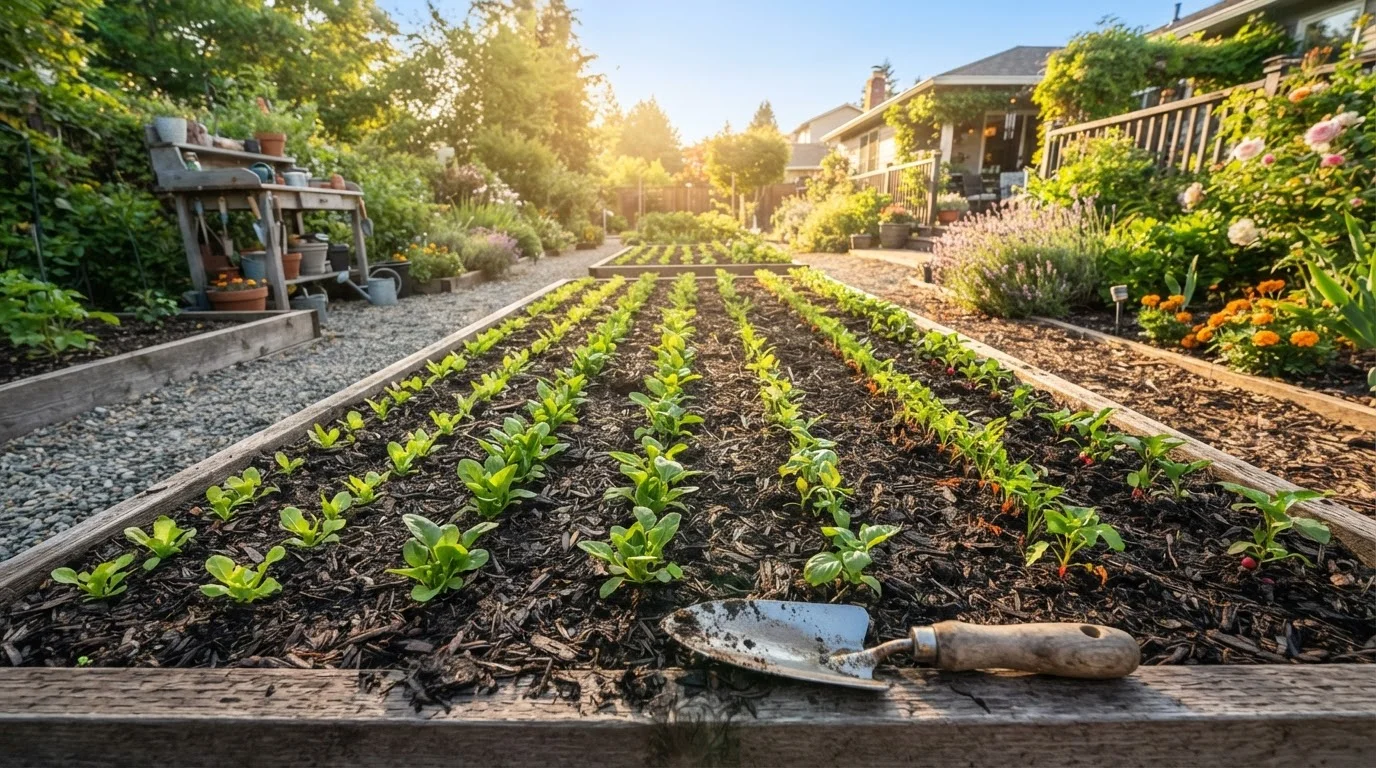
- Vegetable beds and raised planters: Drip irrigation is nearly always the better fit. Rows of tomatoes, peppers, cucumbers, and leafy greens benefit from consistent soil moisture at root level without wet foliage. Pairing drip with mulch further reduces moisture loss. See our companion guide on perennials vs. annuals to think through how plant longevity affects irrigation planning.
- Lawns and large turf areas: Sprinklers are the practical standard. Grass needs even coverage that drip tubing simply can't replicate across a continuous root mat.
- Mixed shrub borders: Drip excels here too - individual emitters can be placed at each plant's base, with output adjusted per species' needs.
- Slopes and uneven terrain: Drip reduces runoff risk significantly. Overhead spray on a slope often loses water to sheeting before it soaks in.
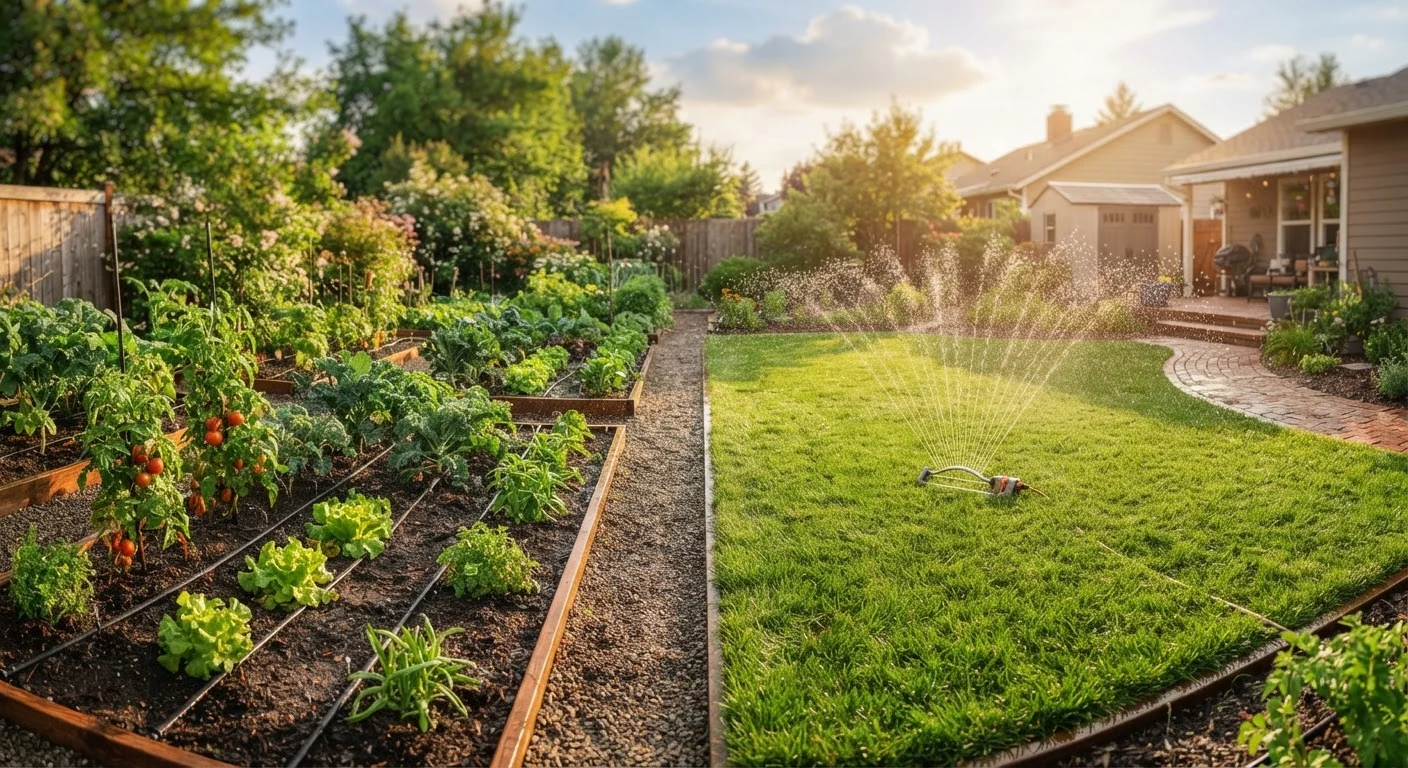
Many homeowners end up using both: in-ground sprinklers for the lawn, drip irrigation for planting beds. Separate zones on a single controller make this combination manageable and efficient.
Run Your System in the Morning
Whether you choose drip or sprinklers, scheduling irrigation for early morning is the most effective practice. Soil absorbs water before midday heat accelerates evaporation, and any foliage that does get wet has time to dry before evening - reducing the conditions that favor fungal disease. Most automatic controllers and simple hose timers make this easy to set and forget.