Why Watering Technique Matters More Than Most Gardeners Think
Most new gardeners assume that more water equals more growth. In practice, overwatering is one of the most common ways to kill otherwise healthy plants - it suffocates roots by displacing the oxygen they need. Underwatering, on the other hand, causes stress that stunts growth and makes plants vulnerable to pests and disease.
Good watering isn't about sticking to a rigid schedule. It's about understanding what your soil, your climate, and your plants are telling you - and responding accordingly. Whether you're tending a raised bed or an in-ground plot, the principles are the same. (If you're still deciding on your setup, our guide on raised beds vs. in-ground planting covers how each affects drainage and moisture retention.)
When to Water: Timing Is Everything
Early morning - generally between 6 a.m. and 10 a.m. - is the ideal window for garden watering. At that hour, temperatures are cooler, winds are calmer, and water has time to soak into the root zone before the midday sun accelerates evaporation. Foliage that gets wet in the morning also dries quickly, which limits the warm, damp conditions that fungal diseases thrive in.
Evening watering is a common workaround when mornings aren't practical, but it comes with tradeoffs: moisture that sits on leaves overnight can encourage mold and mildew. If evening is your only option, direct water at the base of plants rather than overhead. For a deeper look at watering myths - including why nighttime irrigation is riskier than many assume - see the truth about common lawn care myths.
Set a Morning Watering Reminder
If you tend to forget early-morning watering, consider setting a phone alarm or placing your watering can near the door the night before as a visual cue. Consistency in timing - not just volume - is one of the most underrated factors in garden health. Even switching from afternoon to morning watering can noticeably reduce disease pressure over a single growing season.
How Often and How Much: Reading Your Soil and Plants
There's no universal answer to "how often should I water?" - but there are reliable guidelines. Most vegetable gardens and flower beds benefit from about one inch of water per week, including rainfall. Sandy soils drain quickly and may need more frequent watering; clay-heavy soils hold moisture longer and are prone to waterlogging.
The finger test is one of the simplest tools available: push a finger two inches into the soil near the plant's base. If it feels dry at that depth, it's time to water. If it still feels moist, wait another day or two. Consistent shallow watering encourages roots to stay near the surface, making plants less drought-tolerant over time. Deep, infrequent watering - soaking the soil to a depth of six to eight inches - trains roots to reach deeper, where moisture is more stable.
~1 inch
Water most gardens need per week
University cooperative extension programs across the U.S. commonly cite one inch of water per week - from rain or irrigation - as a general baseline for most vegetable gardens.
6-8 inches
Target soil depth for thorough watering
Horticultural guidance from land-grant university extension services recommends watering to this depth to encourage deep root development in most garden vegetables.
Plant signals are equally useful guides. Wilting in the heat of the afternoon can be normal; wilting in the cool of the morning is a clear sign of water stress. Yellowing lower leaves, mushy stems, or a sour smell near the soil often indicate overwatering and possible root rot.
Technique: Where the Water Goes Matters
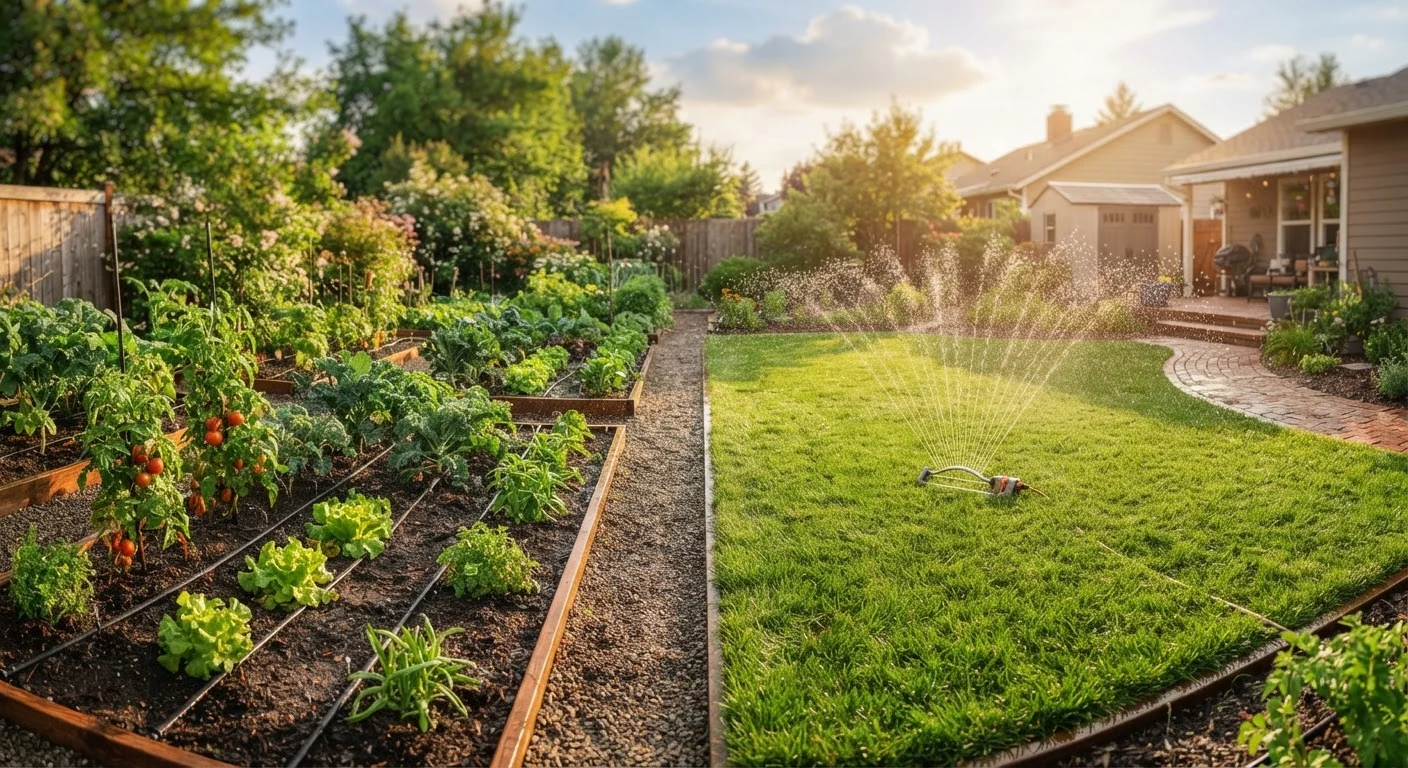
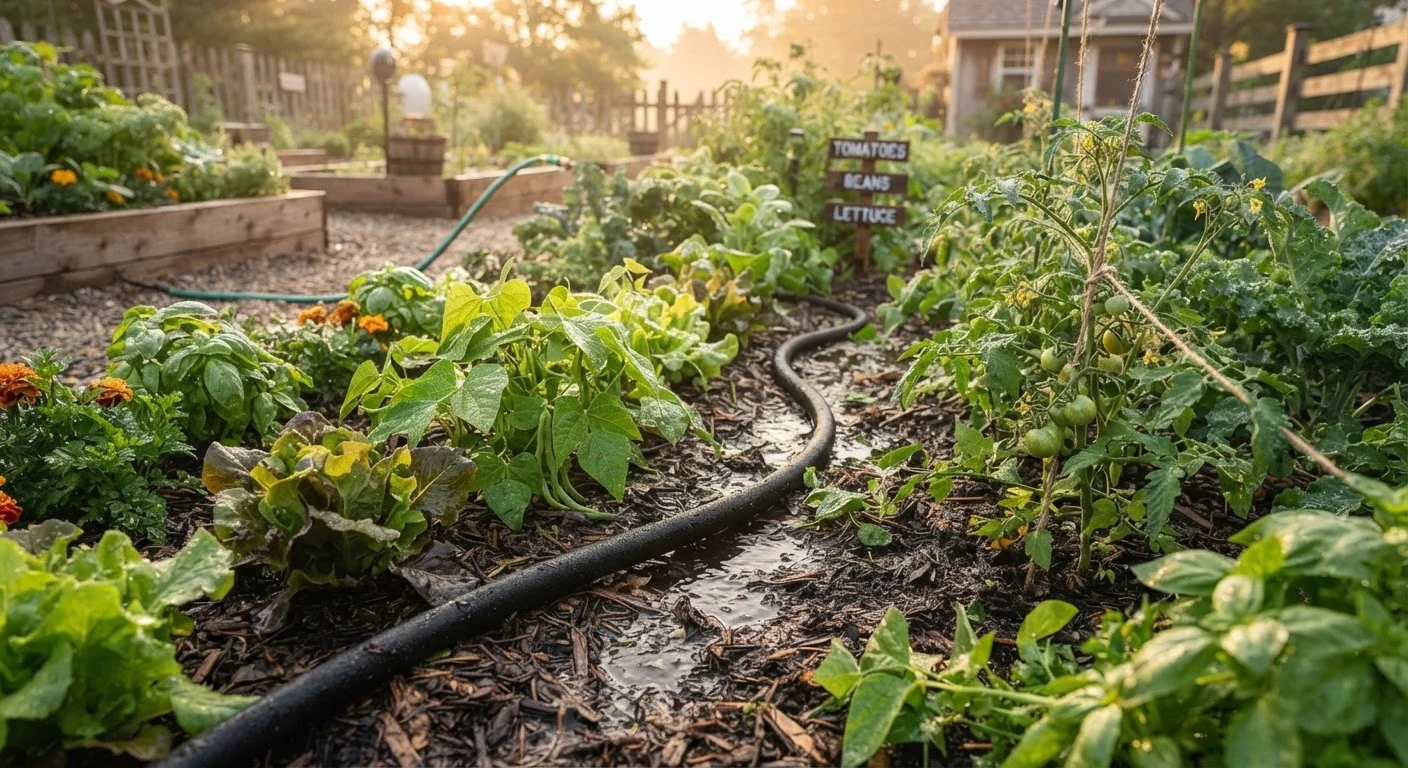
Overhead sprinklers are convenient, but they wet foliage and lose a significant amount of water to evaporation. Drip irrigation and soaker hoses deliver water directly to the root zone, which is where it counts. These methods also keep foliage dry, reducing disease pressure. Our detailed comparison of drip irrigation vs. sprinkler systems can help you decide which approach fits your garden layout.
Pairing good watering technique with a layer of mulch amplifies results considerably. A two-to-three-inch layer of organic mulch around plants slows evaporation, moderates soil temperature, and reduces how often you need to water. See our guide on mulch types and application for specifics.
Water deeply and infrequently rather than a little every day.
Frequent shallow watering keeps moisture near the surface, training roots to stay shallow and making plants dependent on regular irrigation. Deep watering encourages roots to follow moisture downward, building resilience against dry spells.
Always direct water at the soil, not at leaves or stems.
Wet foliage creates favorable conditions for fungal diseases like powdery mildew and blight, which can spread rapidly through a garden. Root-zone watering is also more efficient - less water is lost to evaporation from leaf surfaces.
Check soil moisture before each watering session.
Watering on a fixed calendar ignores rainfall, temperature changes, and the plant's actual condition. Soil checks prevent both overwatering and underwatering by grounding your decision in current conditions rather than habit.
Adjust watering frequency with the seasons.
Plants need more water during hot, dry summer months and significantly less during cooler spring and fall periods. Failing to scale back in cooler weather is a leading cause of root rot in autumn gardens.
Apply mulch to extend the time between waterings.
Mulch acts as an insulating blanket over the soil surface, slowing the evaporation that follows every watering. This reduces the total water your garden requires and helps keep soil temperature more consistent.
Putting It All Together
Effective garden watering is a skill that improves with observation. Start by checking your soil before reaching for the hose, water in the morning whenever possible, and aim water at roots rather than leaves. If you're just getting started with food gardening, our article on starting a vegetable garden from zero walks through soil preparation and plant selection - a strong foundation that makes smart watering even more impactful.
Small adjustments to timing, depth, and delivery method can dramatically change how your garden performs - without adding more work to your routine.