Why 'Made in USA' Is More Complicated Than It Looks
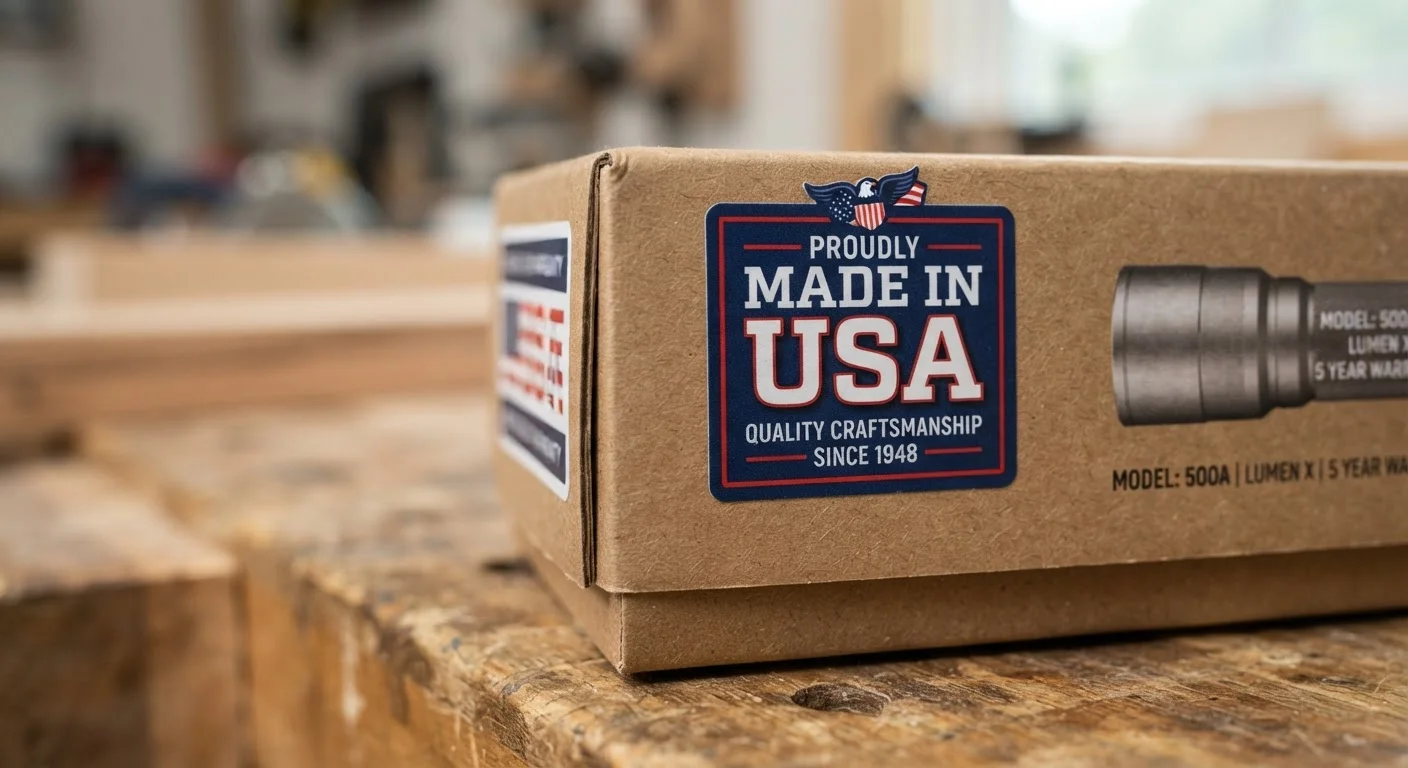
Few phrases carry more emotional weight on a price tag than "Made in USA." For many shoppers, it signals quality, job support, and transparency. But the legal definition behind that label is tighter - and more nuanced - than most people realize. The Federal Trade Commission (FTC) enforces origin labeling standards for most consumer products, and its rules leave plenty of room for grey areas that marketers have learned to navigate.
Understanding what the label actually means - and what it doesn't - helps you make more informed decisions rather than relying on patriotic packaging. This article debunks the most widespread myths about domestic-origin claims. For a broader look at which label claims carry real regulatory weight, see what product labels are actually telling you.
Myth
If a product says 'Made in USA,' every single component must have been produced in the United States.
Fact
The FTC standard is 'all or virtually all' - not 100%. A product can include minor foreign-sourced components and still legally carry an unqualified 'Made in USA' claim.
The FTC's "all or virtually all" standard means the product must be substantially transformed in the U.S., with all significant parts and processing originating domestically. Minor or negligible foreign content doesn't automatically disqualify a product. The FTC evaluates factors such as the proportion of manufacturing costs attributable to domestic work and how central those foreign components are to the finished product. There's no bright-line percentage - it's a totality-of-circumstances test.
Myth
'Assembled in USA' means the same thing as 'Made in USA.'
Fact
These are legally distinct claims with different standards. 'Assembled in USA' requires only that the product was put together domestically - the components themselves can be largely foreign-made.
"Assembled in USA" is what the FTC calls a qualified claim. It's permissible when the product's principal assembly takes place in the U.S. but its components come from abroad. The FTC requires that the assembly be "last substantial transformation" - meaning something meaningful happened here, not just packaging. But the bar is considerably lower than for an unqualified origin claim. Marketers sometimes rely on the patriotic connotations of the word "assembled" without shoppers recognizing the difference.
Myth
The FTC's 'Made in USA' rules apply to every product category sold in the United States.
Fact
Several major product categories - including automobiles, textiles, and food - are governed by separate federal laws with different origin-labeling requirements.
Congress has carved out specific labeling regimes for industries where supply chains and consumer interests vary significantly. Automobiles fall under the American Automobile Labeling Act, textiles under the Textile Fiber Products Identification Act, and many food items under USDA and FDA rules. Each framework has its own definitions, thresholds, and enforcement agencies. A claim that would be misleading under the FTC standard might be perfectly legal under a sector-specific rule - and vice versa.
Myth
A product manufactured overseas can never legally display any 'USA' claim on its packaging.
Fact
Products with foreign manufacturing can legally use qualified phrases like 'Designed in USA' or 'Engineered in USA' - these phrases have no federal definition and are not regulated the same way.
This is actually a significant gap in consumer protection. Phrases such as "Designed in USA," "Engineered in USA," or "American craftsmanship" are largely unregulated marketing language. They don't trigger the FTC's origin-claim standards because they aren't asserting where the product was manufactured. A product entirely built overseas can legally use these phrases, which means shoppers who parse them as origin claims are being misled - even if no law is technically broken. Context and scrutiny matter here more than label-reading alone.
Myth
If a company falsely claims 'Made in USA,' there's no real consequence - it's just marketing puffery.
Fact
False or unsubstantiated 'Made in USA' claims violate FTC regulations and can result in civil penalties and mandatory corrective disclosures.
The FTC treats deceptive origin claims as a violation of Section 5 of the FTC Act, which prohibits unfair or deceptive acts in commerce. Enforcement actions have resulted in companies paying civil penalties, reformulating their labels, and issuing corrective advertising. The FTC has pursued cases against manufacturers in industries ranging from textiles to tool manufacturing. Consumers who believe a claim is false can submit a complaint at ReportFraud.ftc.gov, which the agency uses to identify patterns of deception.
How the Rules Vary by Product Category
The FTC's standard applies broadly to most consumer goods, but certain product categories operate under their own labeling laws - and those laws don't always align perfectly with the FTC framework.
~70%
U.S. parts content threshold cited under AALA
The American Automobile Labeling Act requires passenger cars and light trucks to disclose the percentage of U.S./Canadian parts content; many consumers are unaware this figure can be well below 100% even for domestically assembled vehicles.
No fixed %
FTC domestic content threshold for 'Made in USA'
The FTC does not set a numeric minimum percentage; instead it uses a qualitative 'all or virtually all' standard evaluated on a case-by-case basis.
Automobiles fall under the American Automobile Labeling Act (AALA), which requires new passenger cars and light trucks to display the percentage of U.S. and Canadian parts content, the country of assembly, and the country of origin of the engine and transmission. This is more granular than the FTC standard - a car can carry significant foreign content and still legally be assembled domestically.
Textiles and wool products are governed by the Textile Fiber Products Identification Act and the Wool Products Labeling Act. These laws require fiber content and country of manufacture to be disclosed, but they have different triggers and thresholds than the FTC's general rule.
Food products are regulated by the USDA and FDA. Country-of-origin labeling (COOL) requirements apply to certain commodities - including fresh meat, fish, and some produce - but the rules differ significantly from industrial product labeling. A food item labeled "Product of USA" is subject to its own regulatory definitions, not the FTC standard.
The patchwork nature of these rules is exactly why a single label can mean very different things depending on what you're buying. For guidance on which third-party certifications actually carry verified meaning across product types, see certifications worth trusting on consumer products.
What Shoppers Can Actually Do With This Information
Knowing the rules doesn't mean you need to scrutinize every product in the store. It does mean you can calibrate how much weight to give an origin claim when making a purchase decision.
A few practical points worth keeping in mind:
- Look for specificity. Vague claims like "Designed in USA" or "American quality" have no regulatory definition whatsoever. A precise, unqualified "Made in USA" carries the FTC's "all or virtually all" standard behind it - that's meaningful, even if imperfect.
- Check for a qualified version. If a label says "Assembled in USA from domestic and foreign components," that's actually a more transparent disclosure than an unqualified claim. It signals the manufacturer is being honest about a mixed supply chain.
- Report suspected violations. The FTC accepts consumer complaints about false or misleading origin claims at ReportFraud.ftc.gov. Companies found in violation can face significant civil penalties.
Origin labeling is just one layer of the information on product packaging. Terms like "natural," "non-toxic," and "eco-friendly" operate in an even murkier regulatory space - see separating fact from marketing fiction on eco claims for a closer look. And if you want to understand how private-label products made in the same overseas factories as name brands still carry different labels, private label vs. name brand breaks that down clearly.