How the U.S. Road Sign System Works
Every road sign in the United States is governed by the MUTCD, a federal standard published by the Federal Highway Administration. This document standardizes the shape, color, and meaning of every sign you encounter - so a driver in Florida reads the same visual language as one in Oregon.
Signs are organized into three broad categories: regulatory (what you must or must not do), warning (what's coming up that requires caution), and guide (where you are and how to get where you're going). Shape and color work together as a built-in redundancy system - useful in poor visibility or at a quick glance. See our complete introduction to road safety for the broader context these signs fit into.
| Federal sign standard | Manual on Uniform Traffic Control Devices (MUTCD) (Federal Highway Administration (FHWA)) |
| Regulatory sign shape (stop) | Octagon (8-sided) (MUTCD, FHWA) |
| Warning sign shape | Diamond (square rotated 45°) (MUTCD, FHWA) |
| Yield sign shape | Downward-pointing triangle (MUTCD, FHWA) |
| School zone sign color | Fluorescent yellow-green (MUTCD, FHWA) |
| Construction zone sign color | Orange (MUTCD, FHWA) |
| Guide/direction sign color | Green (highways), Blue (services), Brown (recreation) (MUTCD, FHWA) |
| Penalty for ignoring a stop sign | Varies by state; typically a moving violation with fines and points (State traffic codes) |
Regulatory Signs: Your Legal Obligations
Regulatory signs communicate laws that carry legal weight. Ignoring them isn't just unsafe - it's a traffic violation.
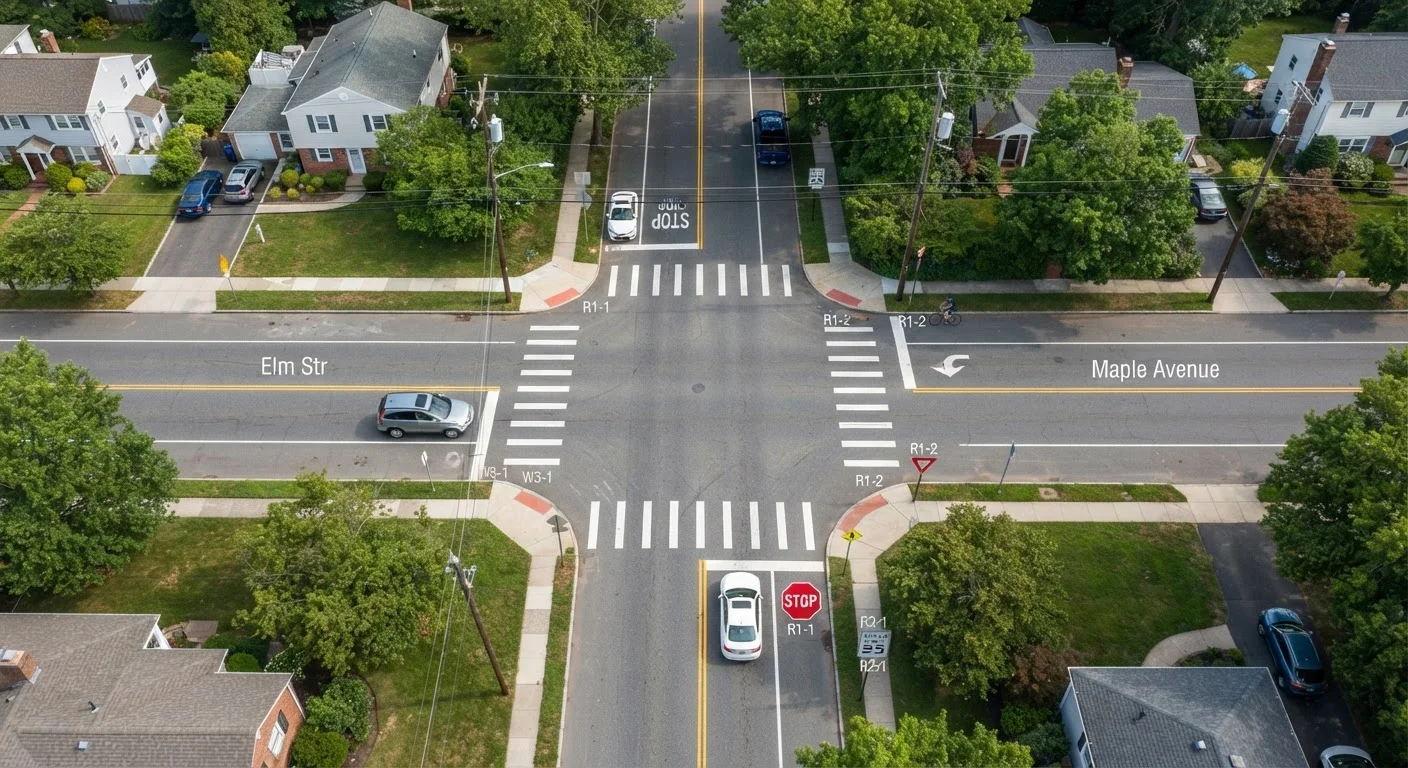
- STOP (red octagon): You must come to a complete stop before the stop line or crosswalk, yield to all crossing traffic and pedestrians, then proceed only when clear. Rolling stops do not satisfy this requirement legally or safely.
- YIELD (downward triangle): Slow down and prepare to stop if necessary. Give right-of-way to traffic in the intersection or roadway you are entering. Unlike a stop sign, you are not always required to come to a full stop - but you must if conditions require it.
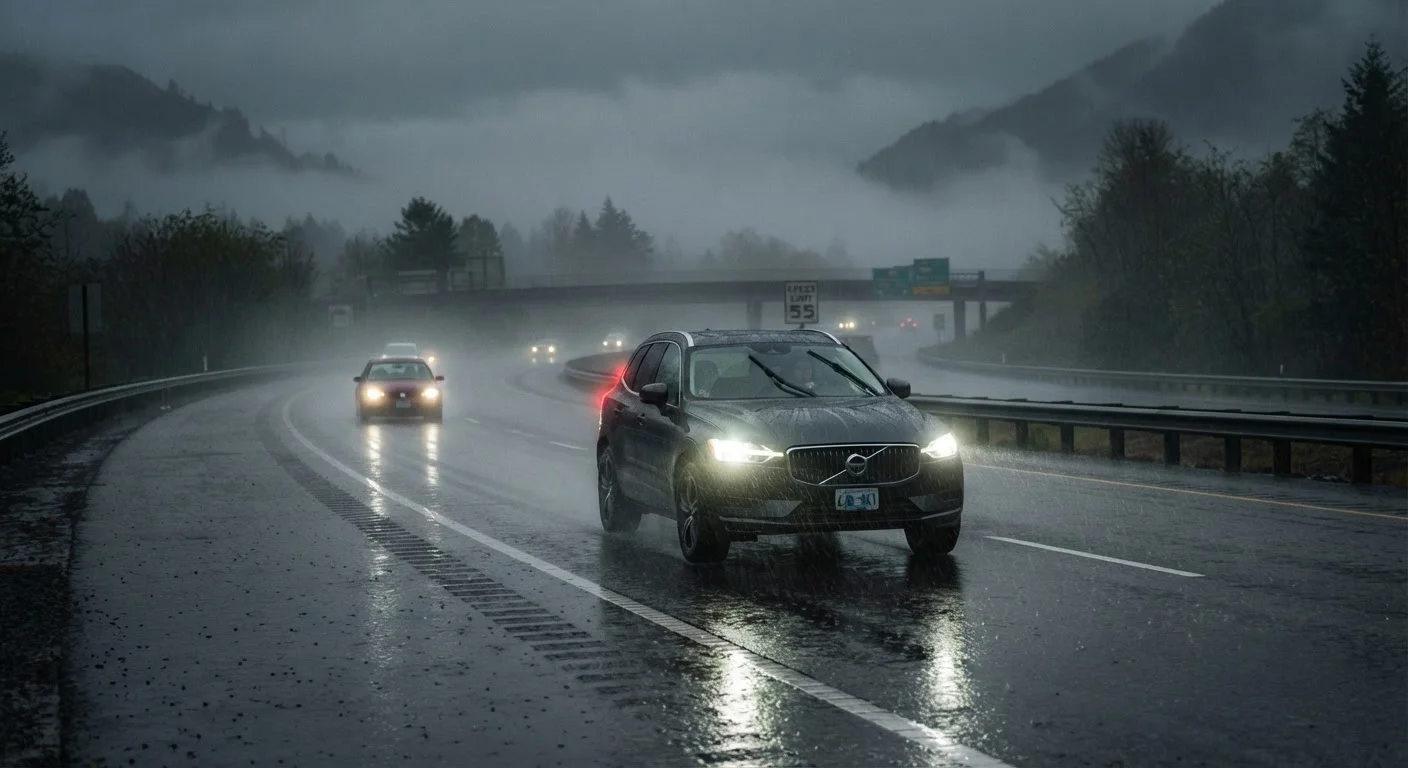
- Speed Limit (white rectangle): The posted number is the maximum speed permitted under ideal conditions. Adverse weather, traffic, or road conditions may legally - and practically - require driving below that limit. For more on adjusting speed safely in poor conditions, see how weather affects stopping distance and traction.
- Do Not Enter / Wrong Way (red): These signs prohibit entry into a roadway or lane. They typically appear on freeway off-ramps and divided highway exits. Proceeding past either sign is extremely dangerous and illegal.
- No Turn on Red: In most U.S. states, a right turn on red after a complete stop is permitted unless this sign is posted. When it is, the prohibition is absolute - regardless of traffic conditions.
Regulatory sign
A sign that communicates traffic laws or regulations drivers are legally required to obey. Failure to comply can result in a traffic citation or contribute to a collision.
Warning sign
A sign that alerts drivers to potentially hazardous conditions or changes in road character ahead, such as curves, intersections, or pedestrian crossings. They are typically diamond-shaped and yellow.
Guide sign
An informational sign that provides directions, distances, services, or points of interest. These are usually rectangular and green, blue, or brown.
MUTCD
The Manual on Uniform Traffic Control Devices, the federal standard published by the Federal Highway Administration (FHWA) that governs the design, placement, and meaning of all road signs in the United States.
Right-of-way
The legal priority given to a vehicle, pedestrian, or cyclist to proceed first at an intersection or crossing. Road signs like STOP and YIELD determine who holds right-of-way.
Advance warning sign
A warning sign placed before a hazard to give drivers adequate time to adjust speed or direction before reaching the condition ahead.
Warning Signs and What They're Telling You
Yellow diamond-shaped warning signs are among the most information-dense signs on the road. They don't impose a specific legal requirement, but they signal that a change in road conditions ahead warrants a reduction in speed and heightened attention.
- Curve and turn signs: Indicate the direction and sharpness of an upcoming bend. Advisory speed plaques beneath these signs (e.g., "35 MPH") reflect the recommended safe speed for that curve under normal conditions - not a legal limit, but a carefully calculated engineering recommendation.
- Intersection ahead: An X-shaped or crossroad symbol warns that a cross-street is approaching, often in a low-visibility area where the intersection may not be obvious.
- Pedestrian and school crossing: School zone signs use fluorescent yellow-green to maximize visibility. When you see a pedestrian crossing sign, reduce speed and be prepared to stop - legally, pedestrians in a crosswalk have right-of-way in most states.
- Slippery when wet: A car with wavy lines beneath it warns that the road surface is especially prone to reduced traction in wet conditions. This is common near bridges, overpasses, and sections with smooth pavement or frequent water runoff.
- Construction zone signs (orange): Orange replaces yellow in active work zones. Fines are frequently doubled in these zones, and reduced speed limits are legally enforceable even when workers are not present.
Understanding warning signs pairs closely with good mirror discipline and situational awareness. The guide to blind spots and mirror positioning explains how to stay aware of what's around you as you adjust for road changes ahead.
Guide Signs and Navigating with Confidence
Guide signs deliver directional and service information without imposing legal requirements. Their color coding is straightforward once you know the system:
- Green: Highway and street name signs, exit numbers, and mileage markers. These are the primary navigation signs on the interstate system.
- Blue: Motorist services - gas, food, lodging, hospitals, and rest areas. On interstates, blue signs with brand logos are common near exits where those services are available.
- Brown: Recreational areas, parks, and cultural or historical sites. If you see brown signs, there's likely a scenic or public area nearby.
One commonly misread guide sign is the exit gore sign - the white-on-green sign positioned in the triangular area between an off-ramp and the main highway. Once you pass it, you are committed to the exit. Attempting to re-enter the main lanes from the gore area is both illegal and dangerous.
Before your next trip, a quick review of your vehicle's condition is as important as knowing the signs you'll encounter. The pre-trip safety checklist covers the essentials to verify before you leave the driveway.